The trend is everywhere. TikTok is flooded with videos of people smearing honey, yogurt, and oatmeal on their faces. Wellness influencers swear by turmeric masks and apple cider vinegar toners. The message is seductive: your kitchen is a skincare aisle, and the products you already own are gentler, cheaper, and more “natural” than anything you can buy in a store.
But is there any truth to it? Can the contents of your fridge really transform your skin? Or is this just another social media trend that sounds good in a 30-second clip but falls apart under scientific scrutiny?
The answer, as with most things in beauty, is complicated. Some kitchen ingredients have genuine evidence behind them. Others are ineffective at best and dangerous at worst. And the difference between the two is not always obvious.
Here is what the science says about farm-to-face beauty—and how to experiment without risking your skin.
The Allure of Kitchen Skincare
It’s easy to see why the trend has taken off.
It’s cheap. A jar of honey costs a fraction of a luxury serum. A tub of plain yogurt is pennies per use. In an era of $80 moisturisers and $120 serums, the appeal of a skincare routine that costs less than a takeaway coffee is obvious.
It feels “natural.” The word “chemical” has become a slur in some wellness circles, and kitchen ingredients feel pure, wholesome, and unprocessed. They are things your grandmother might have used—and there is a certain comfort in that.
It gives you control. You know exactly what’s in the jar. There are no unpronounceable preservatives, no synthetic fragrances, no mystery ingredients. For people who are sensitive to commercial products or distrustful of the beauty industry, DIY skincare feels like taking back power.
And some of it actually works. The scientific literature does support the use of certain kitchen ingredients for specific skin concerns. The problem is that the evidence is often more limited, more nuanced, and more conditional than the influencers suggest.
The Ingredients That Have Real Evidence
Not every kitchen ingredient is a gimmick. Some have been studied, and some have genuine benefits.
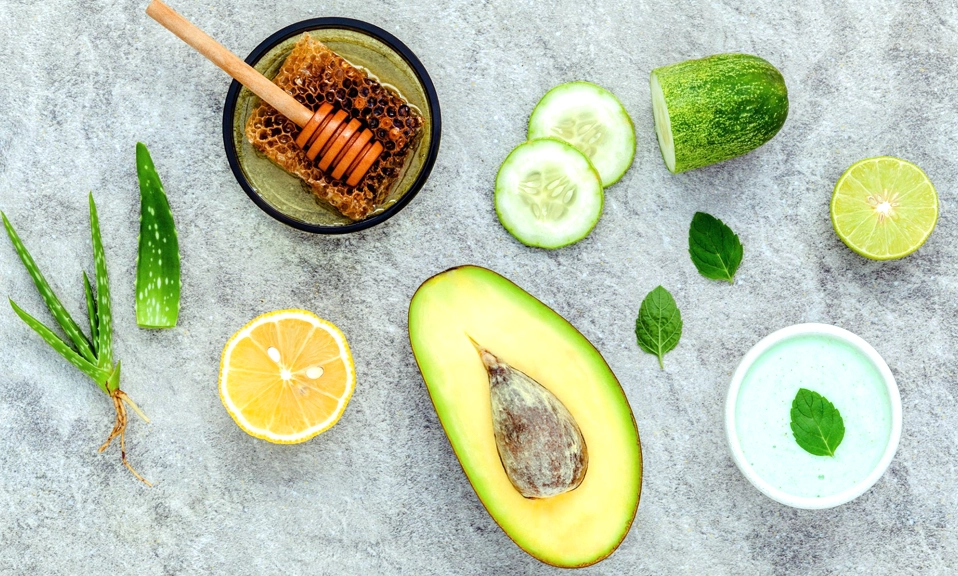
Honey is one of the most well-researched. It is a natural humectant, meaning it draws water into the skin, and it has antimicrobial properties that can help with acne and wound healing. Manuka honey, in particular, has been shown in clinical studies to reduce inflammation and promote tissue repair. A thin layer of raw honey applied as a mask can leave skin soft and soothed—and it is gentle enough for most skin types.
Oatmeal is another ingredient with solid scientific backing. Colloidal oatmeal—finely ground oats suspended in water—is recognised by the FDA as a skin protectant. It contains avenanthramides, compounds that have anti-inflammatory and anti-itch properties, and it is commonly recommended for eczema, psoriasis, and sensitive skin. A simple oatmeal mask can calm irritation and gently exfoliate.
Yogurt contains lactic acid, an alpha-hydroxy acid (AHA) that gently exfoliates dead skin cells and brightens the complexion. It also contains probiotics, which some research suggests may help support the skin barrier. Plain, full-fat yogurt is the best choice—flavoured varieties contain sugar and additives that can irritate the skin.
Green tea is rich in polyphenols, particularly EGCG, which has antioxidant and anti-inflammatory properties. Studies have shown that green tea extract can help reduce redness, soothe irritation, and protect against UV damage (though it is not a substitute for sunscreen). Cooled green tea bags or a chilled green tea compress can be calming for inflamed or puffy skin.
Aloe vera is a classic kitchen remedy for sunburn and irritation. The gel from the leaf is cooling, hydrating, and has mild anti-inflammatory properties. It is particularly useful for soothing skin after sun exposure or after a reaction to a product.
Avocado is rich in healthy fats and vitamins E and C. Mashed avocado can be a nourishing mask for dry skin, although it is messy and the results are temporary.
These ingredients are not miracle cures. They will not erase wrinkles, cure acne, or replace a dermatologist. But they can be gentle, soothing, and mildly beneficial—especially for people with sensitive skin who react badly to commercial products.
The Ingredients That Are Risky (or Useless)
The problem with the farm-to-face trend is that it doesn’t distinguish between the safe and the dangerous. Some of the most popular DIY skincare ingredients are genuinely harmful.
Lemon juice is one of the worst offenders. It is highly acidic (pH around 2), which disrupts the skin’s natural acid mantle and can cause chemical burns, irritation, and long-term damage. It is also phototoxic, meaning it makes the skin more sensitive to the sun and increases the risk of sunburn and hyperpigmentation. Dermatologists universally warn against putting lemon juice on your face.
Baking soda is another common DIY ingredient that should stay in the kitchen. It is alkaline (pH around 9), while the skin is naturally acidic (pH around 5.5). Applying baking soda disrupts the skin barrier, strips natural oils, and can cause irritation and dryness.
Apple cider vinegar is often used as a toner, but it is highly acidic and can burn the skin if not heavily diluted. Even diluted, it can be irritating, especially for sensitive skin. There is no evidence that it has any benefits that cannot be achieved with a properly formulated product.
Cinnamon is a popular addition to DIY lip plumpers and masks, but it is a known irritant and can cause contact dermatitis. It does not “stimulate circulation” in a beneficial way—it irritates the skin, which is not the same thing.
Essential oils are another source of problems. Tea tree oil, lavender oil, and peppermint oil are often added to DIY recipes for their scent or their purported benefits, but they are common allergens and can cause irritation, sensitisation, and allergic reactions. They should never be applied undiluted to the skin.
Egg whites are a popular DIY face mask ingredient, but they carry a risk of salmonella contamination and can cause allergic reactions. They also dry out the skin, which is the opposite of what most people want.
The common thread is that these ingredients are not formulated for skin. They have not been tested for safety or efficacy in the way that commercial products have. They can disrupt the skin barrier, cause irritation, and trigger allergic reactions. And in some cases, they can cause lasting damage.
The Problem with DIY Skincare
Even when the ingredients themselves are safe, the way they are used in DIY skincare is often problematic.
No preservatives. Commercial skincare products contain preservatives to prevent the growth of bacteria, mould, and yeast. DIY mixtures—especially those containing water, yogurt, or fruit—are a breeding ground for microbes. A mask made with fresh ingredients can go bad within days, and applying it to your face can introduce bacteria that cause acne or infections.
No standardisation. The concentration of active ingredients in a kitchen ingredient can vary wildly. The honey in your cupboard might be raw, pasteurised, or adulterated with syrup. The yogurt might be full-fat, low-fat, or flavoured. The aloe vera might be pure gel or a processed product with added thickeners. You have no way of knowing exactly what you are putting on your skin.
No pH balance. The skin has a natural pH of around 5.5. Many kitchen ingredients are far too acidic or far too alkaline, and applying them can disrupt the skin barrier. Formulated products are buffered to a skin-friendly pH. DIY mixtures are not.
No safety testing. Commercial products undergo stability testing, dermatological testing, and challenge testing to ensure they are safe and effective. DIY recipes have not been tested on anyone. You are the test subject.
Allergic reactions. Natural ingredients are not inherently hypoallergenic. In fact, many natural substances—essential oils, plant extracts, nuts, dairy—are common allergens. A reaction to a kitchen ingredient can be severe, and it can develop over time with repeated exposure.
What Dermatologists Say
The professional consensus is clear: DIY skincare is not a substitute for formulated products, and some kitchen ingredients should never be applied to the skin.
“Dermatologists are generally cautious about DIY skincare,” says Dr. Hadley King, a board-certified dermatologist in New York. “Some ingredients can be beneficial, but the risks often outweigh the benefits. The skin barrier is delicate, and disrupting it can lead to irritation, inflammation, and infection.”
Dr. Whitney Bowe, a dermatologist and author of The Beauty of Dirty Skin, has warned that “natural” does not mean “safe.” “Poison ivy is natural,” she has said. “That doesn’t mean you should put it on your face.”
The experts do acknowledge that some kitchen ingredients—honey, oatmeal, yogurt, green tea—can be used safely in moderation, especially for people with sensitive skin who react badly to commercial products. But they emphasise that these should be occasional treatments, not the foundation of a skincare routine, and that they should be used with caution.
How to Experiment Safely
If you want to try farm-to-face beauty, here is how to do it without risking your skin.
Patch test first. Apply a small amount of the ingredient to the inside of your wrist or behind your ear. Wait 24 to 48 hours. If there is no reaction, it is probably safe to use on your face.
Start with the safest ingredients. Honey, oatmeal, plain yogurt, green tea, and aloe vera are the gentlest options. Avoid lemon juice, baking soda, apple cider vinegar, cinnamon, and essential oils entirely.
Keep it simple. A single-ingredient mask is less likely to cause a reaction than a complicated recipe with multiple ingredients. Mixing too many things together increases the risk of irritation.
Don’t store DIY mixtures. Make only what you need for one use. Without preservatives, DIY mixtures can grow bacteria quickly.
Don’t use DIY skincare as a replacement for sunscreen. Some ingredients, like lemon juice, can make your skin more sensitive to the sun. Others, like green tea, have mild photoprotective properties but are not a substitute for SPF. If you are using DIY ingredients, you still need sunscreen.
Listen to your skin. If a DIY treatment causes redness, stinging, itching, or burning, stop using it immediately. Your skin is telling you something.
See a dermatologist for serious concerns. DIY skincare cannot treat acne, rosacea, eczema, or signs of ageing. If you have a skin condition, see a professional. The internet is not a dermatologist.
Can Kitchen Ingredients Transform Your Skincare Routine?
They can help—but they cannot transform it.
Some kitchen ingredients, like honey and oatmeal, have genuine soothing properties and can be a gentle addition to a skincare routine, especially for people with sensitive skin. They are not a replacement for a well-formulated cleanser, moisturiser, and sunscreen, and they are not a cure for any skin condition.
Other ingredients, like lemon juice and baking soda, are actively harmful and should be avoided. The internet does not distinguish between the two, and the results can be painful.
The farm-to-face trend is appealing because it promises simplicity, affordability, and control. But skincare is not as simple as food. The skin is a complex organ with its own biology, and the ingredients that work in a kitchen are not always the ones that work on your face.
Use kitchen ingredients if you enjoy them—as an occasional, gentle treat, with caution and patch testing. But don’t throw away your moisturiser just yet. Your skin deserves better than a TikTok trend.