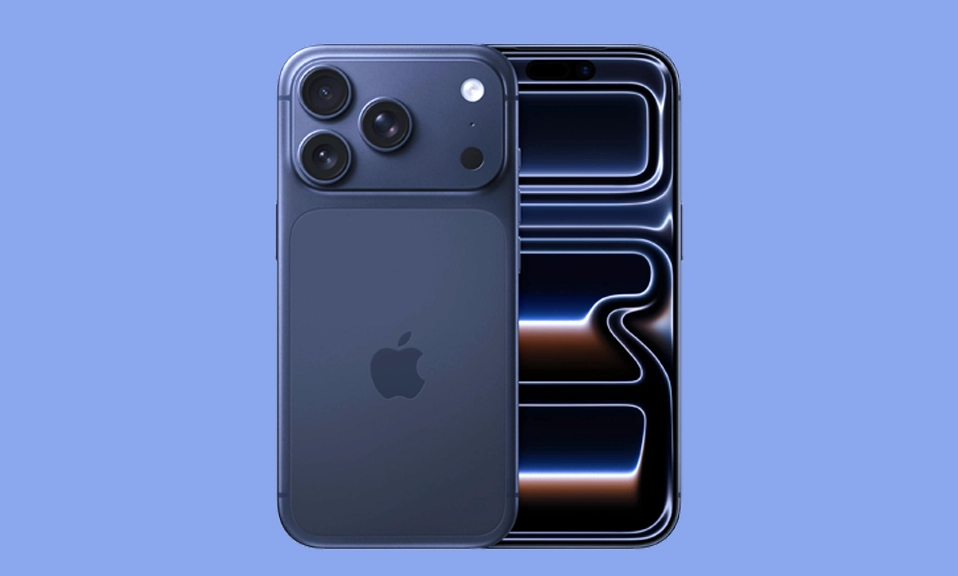
The iPhone 18 Pro was supposed to be Apple’s triumphant return to growth. It launched in September with a 2nm A20 Pro chip, a variable aperture camera, and a premium titanium build. Less than a month later, Apple has reportedly told suppliers to slash component orders by at least 15% — and the reason is simpler than anyone expected.
Apple shares dipped more than 1.6% in premarket trading on Friday after Nikkei Asia reported that the company has cut component orders for the iPhone 18 Pro and Pro Max by at least 15% this month due to “weaker-than-expected” demand . Two component manufacturers told the publication that October orders were slashed by 15% to 20% compared to the original request .
The production cut is significant not just because of its size, but because of its timing. Apple typically ramps up supplier orders after a new iPhone launch, not scales them back. The opposite is happening here.
The Price Problem: $100 More, Fewer Buyers
The most immediate cause is price. The iPhone 18 Pro starts at **$1,199** for the 256GB model, $100 more than last year’s iPhone 17 Pro. The Pro Max starts at $1,299 .
That $100 increase isn’t arbitrary. It’s the direct result of a global memory chip shortage that has driven component costs through the roof. A 12GB LPDDR5X memory module — the kind used in flagship phones — now costs **$145**, a 175% increase year-over-year . Apple CEO Tim Cook described the surge in memory prices as a “once-in-a-century flood” and said price hikes were “unavoidable” .
But consumers aren’t accepting the increase quietly. A supply chain manager told Nikkei that “premium smartphone price increases have weakened consumer purchasing demand” . Analysts at UBS noted that wait times for the iPhone 18 Pro are shortening across more than 30 markets — a warning sign that demand is softening .
The Missing Base Model: A Self-Inflicted Wound
Apple made a strategic decision this year that’s now coming back to bite it. Unlike previous years, there is no standard iPhone 18 launching alongside the Pro models. Apple split the launch, holding the base iPhone 18 and iPhone 18e until early 2027 due to component shortages .
That decision removed the volume driver that typically lifts iPhone sales. The base model is the entry point for most consumers, and without it, Apple’s only new options are the $1,199 Pro and $1,299 Pro Max. A supply chain manager told Nikkei: “Demand in the second half of this year isn’t as strong as in previous years, likely because there’s no baseline iPhone 18” .
The result is a vicious cycle: higher prices reduce demand, which leads to lower sales, which forces production cuts.
The iPhone Duo Factor: A Newcomer Stealing the Spotlight
There’s another factor at play that Apple may not have fully anticipated: the iPhone Duo. Apple’s first foldable, priced at $1,999, launches on October 23 — and it’s the most expensive iPhone ever made .
Some analysts believe the Duo is cannibalizing Pro sales. Consumers who are willing to spend $1,199 on a Pro may be deciding to wait a few weeks and spend $800 more for a foldable instead. One report noted that “iPhone 18 Pro demand appears to be much lower than last year, and many would blame Apple’s pricing… I think it’s the iPhone Duo to blame” .
The concern is significant enough that insiders are already warning the Duo could face similar demand problems. “Given the demand situation for the iPhone 18 Pro and Pro Max, we expect the iPhone Duo will face a similar fate shortly after launch,” one source told Nikkei .
The Broader Market: Apple Isn’t Alone
Apple’s production cut is part of a wider industry slowdown. Samsung, Apple’s biggest rival, is expected to cut Galaxy production by 20% to 30% in the fourth quarter of 2026 . Samsung’s mobile division posted its first-ever operating loss in Q2 2026, and the company is now projected to manufacture just 200 million phones this year, down from an earlier estimate of 270 million .
Globally, IDC predicts a 16.7% year-over-year decline in smartphone shipments, even as average prices rise 27.6% . The memory chip shortage is squeezing the entire industry, and consumers are responding by holding onto their phones longer.
What This Means for Apple
The production cut doesn’t mean the iPhone 18 Pro is a failure. Apple’s stock is still up nearly 8% since the September launch event, and the company remains enormously profitable . The Pro models carry the highest margins in Apple’s lineup, and even with reduced volumes, they generate significant revenue.
But the episode reveals a fundamental tension. Apple is caught between rising component costs it can’t control and consumers who are increasingly price-sensitive. The company can absorb some of the cost, but not all of it. Passing the increase to consumers — as it did with the $100 price hike — works only if demand is elastic enough to sustain it. Right now, it isn’t.
The iPhone 18 Pro is a fantastic phone. It has the fastest chip Apple has ever shipped, the most advanced camera system, and a build quality that justifies its premium positioning. But in a year when everything costs more, “fantastic” may not be enough.
Apple’s next move will be telling. If the base iPhone 18 and iPhone 18e launch in early 2027 at competitive prices, they could reignite volume growth. If Apple is forced to raise prices again on those models to offset memory costs, the demand problem will only get worse.
The iPhone 18 Pro didn’t fail because it’s a bad product. It struggled because the timing — and the price — were wrong. And in the current market, that’s a problem no amount of engineering can fix.