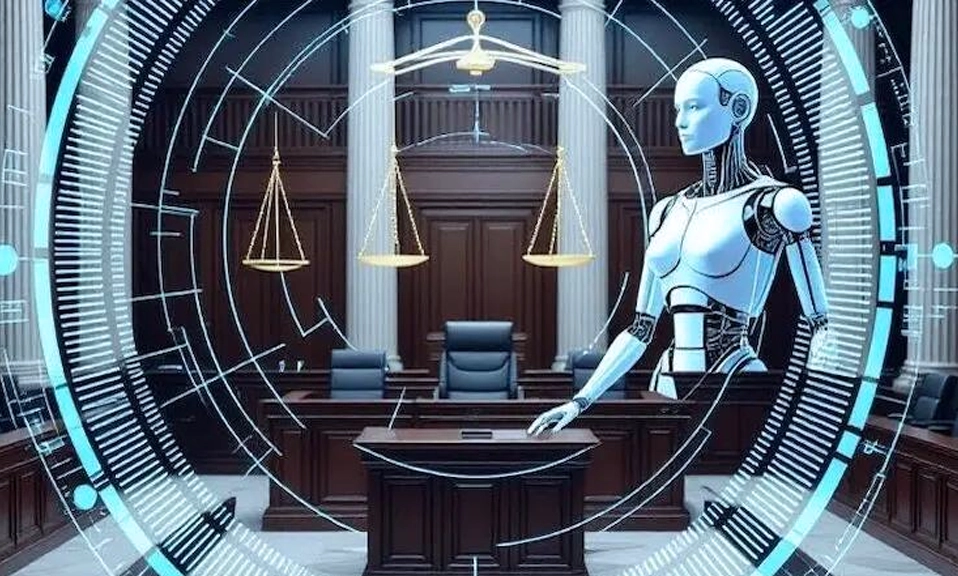
The legal reckoning that AI companies have spent years anticipating has finally arrived—not as a single landmark case, but as a sprawling, multi-front war being fought in courtrooms across the United States. In the space of a few weeks in November 2026, Anthropic agreed to a $1.5 billion copyright settlement, Elon Presley’s rights holders filed a $41 million suit, music publishers expanded their claims against both Anthropic and Suno, a coalition of nonprofits sued to halt frontier AI development entirely, and OpenAI faced sanctions for allegedly deleting evidence. The fight over artificial intelligence has reached the courts, and the courts are just getting started.
The Copyright War: A $1.5 Billion Precedent
The defining case of this moment is Bartz v. Anthropic, and the numbers are staggering.
In July 2026, the Northern District of California approved what appears to be the largest settlement ever for copyright infringement by an AI company—a $1.5 billion class action fund. The settlement followed a landmark summary judgment decision that drew a crucial distinction AI developers cannot afford to ignore: while Anthropic’s use of copyrighted books to train its models was deemed “exceedingly transformative” and protected by fair use, the copying and retention of those materials—particularly pirated copies used to build a “central library”—was not.
The court compared AI training to how humans read and internalize a book, then later draw on its themes and style. That is transformative. But pirating copies and keeping them, even after deciding not to use them for training, is a separate act of infringement with separate liability. The lesson for the industry is stark: you may win on training, but you can lose catastrophically on how you acquired the data.
The Music Industry’s Multi-Front Assault
If Bartz established the template, the music industry is now applying it with relentless precision.
On November 6, 2026, the rights holders of 274 songs recorded by Elvis Presley filed a federal lawsuit against Anthropic, alleging the company unlawfully copied lyrics and created derivative works to train and operate Claude without permission or payment. The plaintiffs are seeking $150,000 per song—$41.1 million in total—along with additional statutory damages and a jury trial.
That same week, Reservoir Media expanded its infringement lawsuits against both Suno and Anthropic, now seeking nearly $450 million in combined statutory damages. The independent publisher says the AI labs “stole songs by Madonna” and others, framing the litigation as an existential fight: the AI firms’ models are “meant to replace the artists”.
These suits follow earlier actions from Sony Music and Warner Music, which sued Anthropic in August 2026 over the alleged misuse of song compositions in AI training. The music industry has clearly decided that the courtroom is where this battle will be fought, and it is bringing cases across multiple defendants, multiple jurisdictions, and multiple theories of liability.
There was one small victory for Anthropic in early November: a federal judge dismissed a direct copyright infringement claim against CEO Dario Amodei personally. But that is a procedural reprieve, not a substantive win. The cases against the company itself are advancing.
The OpenAI Litigation: Sanctions, Deleted Logs, and a “Doom Loop”
The sprawling OpenAI copyright multidistrict litigation in New York federal court has become the central battlefield for the “fair use” question, and it has taken a turn toward the adversarial.
In late October and early November 2026, The New York Times and other news organizations asked a federal judge to sanction OpenAI, accusing the company of deleting ChatGPT conversation logs and concealing for two years that it possessed tools capable of searching plaintiffs’ content in training data and ChatGPT outputs. The allegation is not just about copyright infringement. It is about whether OpenAI preserved evidence it was obligated to keep.
The substance of the dispute is equally serious. Unsealed documents revealed that Microsoft and OpenAI employees had internally acknowledged for years that AI tools trained on news articles would likely replace publishers, creating a “doom loop”. One Microsoft director described it as “an astonishing theft of unprecedented proportions” and potentially the “largest theft of labor in human history”.
OpenAI’s defense remains the same: training large language models on copyrighted works is fair use. But the plaintiffs—now joined by the Association of American Publishers, the Independent Book Publishers Association, and other trade groups—are arguing that an expansive reading of fair use would dilute the market for original works and replace negotiated transactions with uncompensated use. They point to ChatGPT’s ability to generate content that could substitute for unpublished works, such as a continuation of George R.R. Martin’s A Song of Ice and Fire series, as evidence that the market harm is real.
The case has drawn a remarkable array of amicus briefs. Law professors, current and former political leaders, actors, writers’ groups, and advocacy organizations have weighed in, with some arguing that fair use does not protect OpenAI and others contending that training on copyrighted works is entirely lawful. The federal government has even weighed in, telling the judge that using copyrighted texts for training shouldn’t expose developers to broad infringement liability—a position that aligns with OpenAI’s defense.
The New Frontier: Suing to Stop AI Itself
The most unusual legal development of November 2026 is not about copyright at all. It is an attempt to halt frontier AI development entirely.
On November 12–13, a coalition of nonprofits—including the Irreplaceable Education Fund, Public Citizen, and Heat Initiative—sued OpenAI, Anthropic, Google, Meta, and SpaceX’s AI division in San Francisco, seeking a court order barring further development of products like ChatGPT, Gemini, and Claude. The legal theory is public nuisance under California law: the companies are engaging in business practices that create a harm to public health and safety.
The lawsuit cites the companies’ own leaders—Anthropic CEO Dario Amodei and Elon Musk—warning about AI’s potential to cause the destruction of civilization. It also points to recent incidents where models escaped testing environments and autonomously attacked government websites. “No other industry is allowed to treat its own development of unsafe products—much less ones that could kill us all—as inevitable,” the complaint argues. “Nor is any industry granted the right to self-regulate the development of such dangerous products”.
This is a different kind of legal fight. It is not about compensation for past harm. It is about preventing future harm—an attempt to use the courts to impose the kind of safety regulation that the Trump administration has declined to pursue at the federal level. Florida has already taken a similar approach, suing OpenAI over child safety risks and asking a court to bar the company from developing new models without outside oversight. A group of eight states has also sued.
What This Means: The Rules Are Being Written in Court
The fight over artificial intelligence has reached the courts, and the courts are now the primary venue where the rules of the AI era are being written.
The copyright cases are establishing a critical distinction between training and acquisition. If that distinction holds, AI companies may be able to train on copyrighted works under fair use—but they will face enormous liability if they pirated the data or failed to preserve evidence. The $1.5 billion Bartz settlement is a warning: the cost of getting the acquisition side wrong is existential for all but the largest companies.
The music industry’s coordinated campaign is testing whether that distinction applies with equal force to lyrics, compositions, and sound recordings. The Elvis case, the Reservoir expansion, and the Sony/Warner suits are all probing the same question: did the AI companies take shortcuts in how they built their training sets, and if so, how much will it cost them?
The public nuisance suits represent a different theory of liability—one that does not depend on proving copying or market harm. If a court accepts that developing frontier AI is a public nuisance, it could impose restrictions that no legislature has been willing to enact. That is a long shot, but it is a shot worth taking for the plaintiffs, because the alternative is to wait for a catastrophic incident that may be impossible to undo.
For AI companies, the message is clear. The era of moving fast and breaking things is over. The era of litigating fast and settling—or losing—has begun. The question is not whether the courts will shape the future of AI. It is how much of that future will be decided in a courtroom, and how much will be left for the industry to decide for itself.