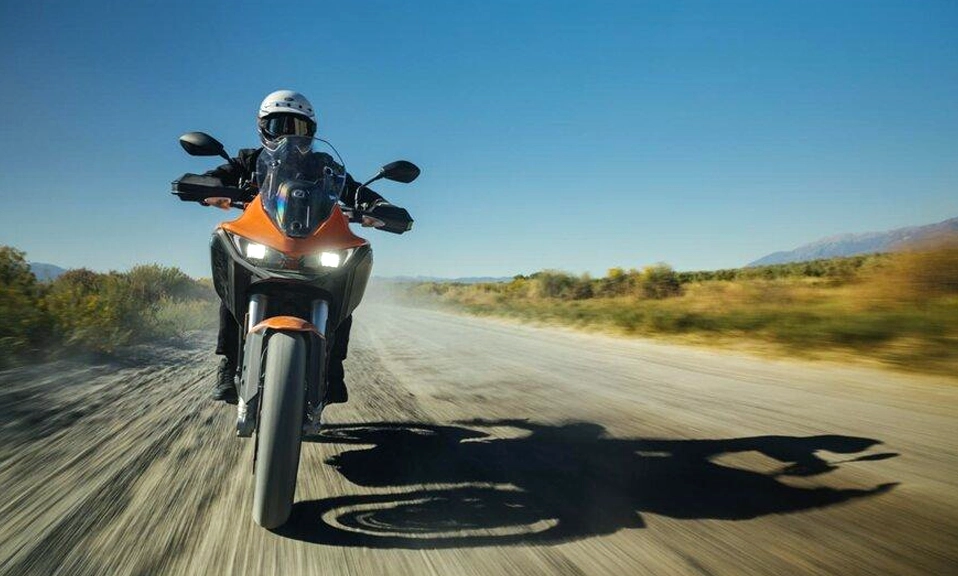
On a single charge, a stock Zero DS rode from the French Alps to the Mediterranean coast—436.5 kilometres without stopping. It shattered the previous electric motorcycle range record by 40 percent. But does one extraordinary ride mean the petrol bike’s days are numbered? The honest answer is more complicated than the headline suggests.
The ride, completed last month and verified by Guinness World Records this week, was piloted by Belgian rider Jelle Verstaen. Starting from Les Claux in the French Alps and finishing in the Camargue near the Mediterranean, the Zero DS covered 271.2 miles (436.5 km) on public roads, crossing mountain passes and navigating towns and villages. It wasn’t a laboratory stunt. It was a real-world test, conducted on roads open to traffic, in weather that included heavy rain during the final 60 miles.
The previous record belonged to the Verge TS Pro, which managed 193 miles (310.6 km) in 2025. Zero didn’t just beat it; it demolished it by 125.8 kilometres, a 40 percent improvement that reset expectations for what an electric motorcycle can do on a single charge.
The Details Behind the Number
The Zero DS used for the record was a stock model, but it carried one factory-approved accessory: the Power Tank, which increases battery capacity from 15.6 kWh to 19.2 kWh. This is not a custom modification; it’s an official option that can be installed at dealerships. That matters, because it means the record wasn’t achieved with some one-off prototype battery that no customer could ever buy.
The riding strategy was equally important. The team avoided major highways, favouring single-lane roads where a steady speed could be maintained. They rode at night when traffic was lighter, and kept a cruising average of roughly 32 mph (52 km/h) where conditions allowed. Verstaen used regenerative braking through the mountain passes to recover energy, and the route’s net elevation loss—starting in the Alps and finishing at sea level—gave the bike a natural advantage that a flat commute would not.
In other words, the record was real, but it was optimised. The Zero DS’s published city range with the standard battery is 155 miles (249 km). The record ride went substantially farther than that published figure, thanks to the extra battery capacity, the route, and the riding style.
What This Means for Range Anxiety
The immediate takeaway is that the ceiling for electric motorcycle range is higher than many riders assumed. A production bike, with an approved accessory, covered a distance that rivals some mid-size electric cars. The other two bikes in the convoy—a Zero SR/S and a Zero DSR/X—also beat the previous record, finishing at 350 km and 384 km respectively, both on stock batteries. Even the “shorter” rides in the group outperformed the best the industry had offered a year earlier.
That is a meaningful data point for riders who dismissed electric motorcycles as city-only toys. It proves that the technology can go the distance, at least under favourable conditions.
The Caveats That Keep Petrol Bikes in the Game
But a record ride is not the same as a replacement for the petrol motorcycle, and the gap between the two is wider than a single headline.
The route was optimised for efficiency. Avoiding highways and maintaining a steady 32 mph is not how most riders use their bikes. A commuter fighting motorway traffic at 70 mph, or a touring rider crossing long, flat plains with no opportunity for regenerative braking, will see range drop well below the record figure. The Zero DS’s own city range rating—249 km with the standard battery—is a more realistic benchmark for everyday use, and it is still a fraction of what a comparable petrol bike can achieve on a tank.
The Power Tank is an extra. The record-setting bike had the larger battery. A buyer who wants that range will pay for the upgrade. The base model, without the Power Tank, would not have gone as far.
Electric motorcycles remain expensive. The Zero DS used in the record is not currently sold in the United States, and electric motorcycles generally carry a significant price premium over petrol equivalents. The operating costs are lower—charging is cheaper than refuelling, and electric drivetrains require less maintenance—but the upfront cost is still a barrier for many riders.
Charging infrastructure is not there yet. A petrol bike can refuel in minutes at any service station. An electric bike needs a charging point, and on a long tour, the availability and speed of those chargers determine whether the trip is practical. The record ride was a single charge, not a multi-day tour with charging stops.
Weight and packaging remain challenges. Battery technology still suffers from a lower energy-to-weight ratio than liquid fuels, and that affects how motorcycles can be designed. The Zero DS is a capable bike, but the physics of carrying enough battery for long-distance touring without adding excessive weight is a constraint that petrol bikes simply do not face.
The Emotional Dimension
There is also a reason beyond specifications that petrol bikes remain beloved: the engine. As one analysis put it, motorcycles are mostly used for fun, and the average buyer “still wants an engine note”. Electric motorcycles are smooth, quiet, and instant in their torque delivery, but they do not offer the mechanical character that many riders associate with motorcycling. That is not a rational objection, but it is a real one.
The Zero DS’s 436.5-kilometre
ride is a genuine milestone. It proves that electric motorcycles can cover long distances on a single charge, and it raises the bar for an industry that has often been dismissed as limited to short urban hops. For riders whose use case is commuting, weekend rides, and the occasional longer trip on secondary roads, the range is becoming credible.
But it does not mean electric motorcycles are ready to replace petrol bikes wholesale. The record was achieved with an extra battery, a carefully chosen route, and a riding style optimised for efficiency. The average rider’s commute, touring route, and budget are different. The technology is advancing quickly—the 40 percent jump in a single year is evidence of that—but the infrastructure, the pricing, and the emotional attachment to the internal combustion engine are not disappearing overnight.
The petrol bike is not dead. But for the first time, the electric alternative is starting to look like it could genuinely go the distance. That is a significant shift, and it is one that riders—and manufacturers—will be watching closely.