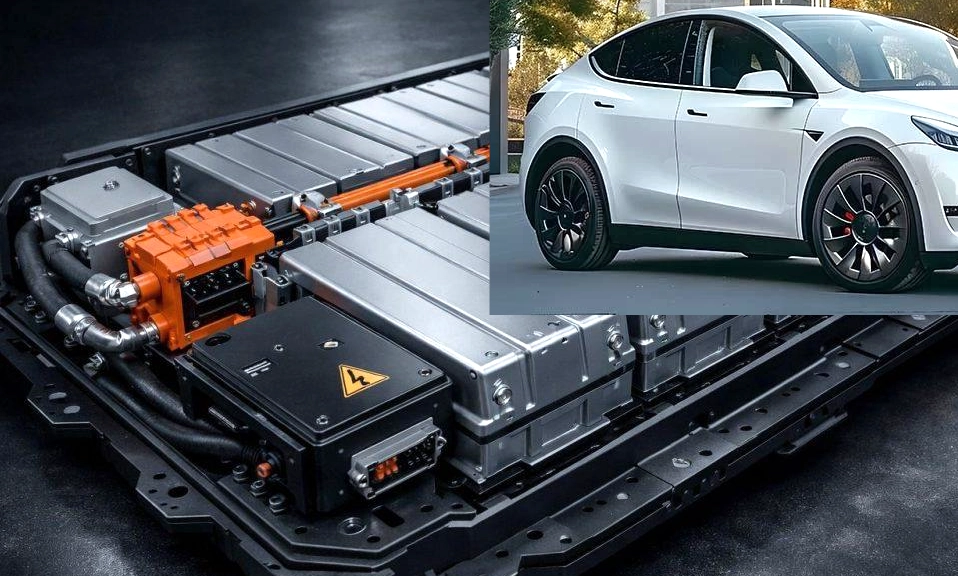
The $10,000 electric car is no longer a hypothetical. It is sitting in showrooms in China right now, with a five-seat cabin, a 300-kilometre range, and a price tag that undercuts almost every new car sold in the United States by tens of thousands of dollars. But whether this breakthrough can translate into a global mainstream moment depends on a far messier question: can the rest of the world actually buy one?
The car that has forced this question into the open is the second-generation BYD Seagull. Launched in China on October 20, 2026, it starts at 65,900 yuan—roughly $9,800**—and drops to about **$9,400 with a trade-in subsidy. For that money, buyers get a hatchback that has grown significantly from its predecessor: it is now 4,205 mm long with a 2,650 mm wheelbase, enough to seat five instead of four, and it switches to rear-wheel drive with a 95 kW motor and a multi-link independent rear suspension. The base model carries a 30.1 kWh Blade battery with 320 km of CLTC range; upper trims get a 39.2 kWh pack and 420 km, plus flash charging that goes from 10% to 70% in five minutes on compatible hardware. The flagship Smart Edition even includes a roof-mounted lidar and the DiPilot 300 driver-assistance system—the first time lidar has appeared in a mass-market car below 100,000 yuan.
And the Seagull is not alone. The Geely EX2 (also sold as the Xingyuan or Star Wish) starts at $9,130** and finished 2025 as China’s best-selling car, with **226,465 units moved in 2026 so far**. It offers **193 to 298 miles of range** depending on the version, and reviewers who have driven it describe it as “smooth riding, quiet, and refined”—”not at all like it’s literally less than half the price of some of the cheapest cars on the U.S. market”. The **Leapmotor A10**, from Stellantis’ Chinese partner, launched at around **$9,500 with a 53 kWh battery, over 500 km of range, and 100 kW DC fast charging that goes from 30% to 80% in about 15 minutes. The Arcfox Beta T1, built by Mercedes’ Chinese joint-venture partner BAIC, starts at roughly $9,200** and comes with a **15.6-inch touchscreen**, a panoramic glass roof, seat heating, a 360-degree camera, and a **42.3 kWh LFP battery** good for **279 miles of CLTC range**. Even the **Wuling Hongguang Mini EV**, the tiny urban runabout, starts at around **$5,500 to $6,500.
These are not glorified golf carts. They are real cars, with real safety credentials. The Geely EX2 and Leapmotor B05 both earned five-star ANCAP ratings under the stricter 2026 test protocols, with the EX2 scoring 79% for safe driving and 95% for post-crash safety. The idea that a $10,000 EV must be a death trap is, at least for these models, outdated.
So why aren’t these cars flooding American and European roads? The answer is a combination of policy, economics, and infrastructure that has little to do with the cars themselves.
In the United States, Chinese-branded EVs are effectively unavailable to retail buyers. A 100% tariff wall—described by one analysis as an “invisible 127 percent tax”—blocks imports, and restrictions on connected-vehicle technology add a national-security layer on top. The cheapest new EV available to American buyers is the **2026 Nissan Leaf at $29,990**, roughly three times the price of the Seagull. The $10,000 EV exists; Americans simply cannot buy it.
In Europe, the picture is more complicated but still constrained. The Seagull is sold as the Dolphin Surf, but it starts at €19,990 in France and around €22,990 in Germany—more than double its Chinese price, thanks to tariffs, homologation costs, and local pricing strategies. That is still competitive against European rivals: Volkswagen and Stellantis are targeting €20,000 to €25,000 for their upcoming urban EVs, and the Seagull undercuts them even at its European price. The affordable EV wave is real in Europe—sales of models under €25,000 are set to rise sevenfold in 2026 compared to 2024, with almost 40 new electric models launched in the first half of the year alone. But the €10,000 price point remains out of reach for European buyers.
The deeper challenge is not price alone. It is charging poverty—the inability to afford or access sufficient, reliable, and socially inclusive charging infrastructure. A $10,000 EV is only a bargain if you can charge it cheaply and conveniently. For renters without off-street parking, or drivers in regions where public charging is sparse or broken, the savings on the sticker price can be erased by the cost and hassle of charging. The **$524 billion in cumulative investment** needed for charging infrastructure through 2035 is not a footnote to the affordable EV story; it is the precondition for it.
There is also the question of consumer expectations. The Geely EX2 takes 11.5 seconds to reach 60 mph and has a top speed of 85 mph. That is fine for city driving, but it is not the experience most American or European buyers associate with a new car. The $10,000 EV is a city car, a second car, a commuter—not a replacement for a family SUV or a long-distance tourer. Its mainstream appeal depends on whether buyers are willing to accept that trade-off.
None of this means the $10,000 EV is a failure. It means the revolution is **regional, not global**—for now. In China, where the price war is fiercest and the supply chain is deepest, the $10,000 EV is already mainstream. BYD’s vertically integrated production—it makes its own power electronics, motors, and LFP cells—gives it a cost advantage that foreign automakers cannot easily match. In Europe, the $10,000 EV is arriving at €20,000, not €10,000, but it is still reshaping the market and forcing incumbents to respond. In the US, it is a policy question as much as a product question: the cars exist, but the tariff wall and the charging gap stand in the way.
The $10,000 electric car has arrived. It is real, it is capable, and it is selling in the hundreds of thousands. Whether it goes mainstream in the sense of transforming global car ownership depends on whether the barriers around it—tariffs, charging access, and consumer habits—fall as fast as the battery prices that made it possible. The car is here. The question is whether the world is ready to let it in.