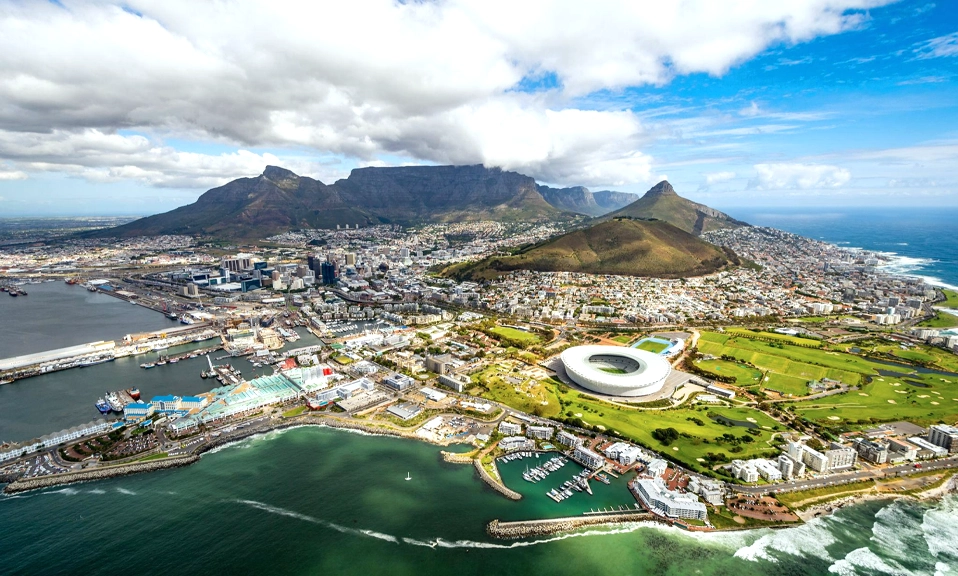
On 19 October 2027, a Qantas Boeing 787-9 will lift off from Sydney Kingsford Smith Airport and, for the first time in history, land directly in Cape Town. The flight will take roughly 14 and a half hours—a journey that once required a connection through Johannesburg or another hub, and that 75 years ago took 66 hours and four stops. For travellers between Australia and South Africa’s Mother City, the distance is about to collapse.
The announcement, made on 6 November 2026, marks the first-ever non-stop service between Australia and Cape Town. It is a seasonal route, timed to Cape Town’s southern hemisphere summer, and it will operate until 24 March 2028. Tickets went on sale the same day, with economy return fares starting from AU$2,470.
The Route: Three Flights a Week, One Long Day
The service will run three times per week on Tuesdays, Fridays, and Sundays, using the Boeing 787-9 Dreamliner. The Sydney-to-Cape Town leg, designated QF89, departs Sydney at 9:15am and arrives in Cape Town at 2:40pm the same afternoon, with a block time of approximately 14 hours and 25 minutes. The return leg, QF90, leaves Cape Town at 4:40pm and arrives in Sydney at 1:45pm the following day.
The route covers roughly 6,828 miles (5,933 nautical miles) on a great-circle basis, placing it among Qantas’s longer non-stop services. It is made possible by the arrival of additional 787-9 Dreamliners in late 2027, part of the airline’s fleet renewal programme, which gives Qantas the flexibility to open new long-haul routes where demand is strongest.
The Demand: A Record Market Finally Served Directly
The case for the route is built on numbers that have been growing steadily for years. In 2025, two-way passenger traffic between Cape Town and Australia reached a record 80,000 passengers—a recovery to 130% of pre-Covid levels. Across Australia and New Zealand combined, the figure reached 98,000. More than 120,000 Australians visited South Africa in 2025, and in June 2026, Australia overtook Germany to become South Africa’s third-largest overseas source market, with arrivals up 19% year on year.
The demand is also personal. Almost 225,000 South African-born people now live in Australia, about a quarter of them in New South Wales. Until now, those travellers—and the tens of thousands of Australians heading to Cape Town each year—have had to connect through Johannesburg on Qantas’s existing services, or through another hub. Qantas International CEO Cam Wallace said tens of thousands of customers already use the Johannesburg connection via partner airline Airlink, “so we know there’s strong demand for a non-stop service”.
What It Means for Cape Town
For Cape Town, the route is more than a convenience. It closes a gap that has long defined the city’s international connectivity. Cape Town International Airport is now, finally, connected to all seven continents. The route has been described as unlocking “one of Cape Town’s largest unserved markets”.
Wesgro CEO Wrenelle Stander framed the impact in economic terms: direct air access is “one of the most important drivers of tourism growth,” and the new service will “unlock new opportunities for tourism, trade, investment and business exchange while making it easier than ever for Australian travellers to visit our region”. The Western Cape’s provincial minister for economic development and tourism, Dr Ivan Meyer, added that the link will “open doors for our exporters, attract investment and strengthen the province’s ties with Australia and New Zealand”.
The timing is strategic. The route launches ahead of the Cricket World Cup in South Africa and the Rugby World Cup in Australia, two events that will drive significant two-way travel between the two countries. And it adds nearly 30,000 seats between Australia and South Africa in its first season alone—capacity that will support the visitor economies of both Cape Town and the wider Western Cape.
The Aircraft: A 787-9 Built for the Long Haul
The Boeing 787-9 Dreamliner is well suited to a route of this length. It offers the range to cover the 5,933 nautical miles non-stop, the efficiency to make a seasonal, three-times-weekly service viable, and the cabin comfort—lower cabin altitude, larger windows, and a quieter ride—that matters on a 14-hour journey. Qantas has not yet released the full cabin configuration or the specific inflight product for the route, but the 787-9 is already a familiar sight on the airline’s long-haul network, and its deployment here signals that Qantas sees Cape Town as a premium destination rather than a budget add-on.
A 75-Year Journey
There is a poetic symmetry to the launch. Qantas first flew to South Africa in 1952, on what was known as the “Wallaby Route” to Johannesburg. That journey took 66 hours and required stops in Perth, the Cocos Islands, and Mauritius. Seventy-five years later, the same airline will cover the distance between Sydney and Cape Town in a single hop, in less than a quarter of the time.
The new route does not replace Qantas’s existing services from Sydney and Perth to Johannesburg. It complements them, expanding the airline’s African network and giving travellers a direct option to South Africa’s most popular tourist destination. For Cape Town, it is a long-awaited connection to a major market. For Australia, it is a new non-stop gateway to one of the world’s most celebrated cities.
The Sydney–Cape Town
route is not just another long-haul launch. It is the first direct air link between Australia and the Mother City, a connection that has been missing from both countries’ networks for decades. It arrives with strong demand behind it, a modern and efficient aircraft to operate it, and a tourism economy on both ends that is ready to benefit from it.
For travellers, the appeal is simple: leave Sydney in the morning, land in Cape Town the same afternoon, and skip the connection entirely. For the airlines and the tourism boards, the appeal is measured in seats, spend, and the kind of direct access that turns a long-haul destination into a viable holiday. The first flight departs on 19 October 2027. Cape Town is about to become a whole lot closer.