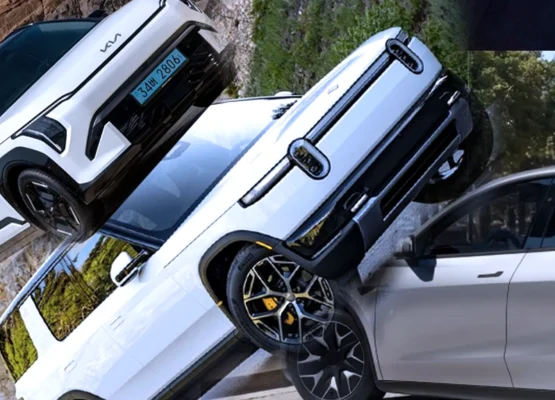
China’s largest auto exporter just got the green light for an assembly plant in Kigali. It’s a small factory with a very big idea behind it.
On September 18, 2026, Rwanda’s Cabinet approved a strategic investment agreement with Chery Holding Rwanda Ltd to establish an electric vehicle assembly plant in the country. The decision formalised a relationship that has been building since April 2025, when the Rwanda Development Board signed a Memorandum of Understanding with Chery covering electric mobility, green energy, agriculture, and mining.
The details are still thin. The Cabinet communiqué didn’t disclose the investment value, the plant’s location, its production capacity, or how many jobs it will create. But the RDB has previously cited an indicative investment requirement of $39.25 million and the potential for around 2,000 direct jobs for an electric-car assembly project — figures that haven’t been confirmed for Chery specifically.
What we do know is that Chery isn’t dipping a toe. It’s building a foundation.
Why Rwanda, and Why Now
Rwanda has spent the last several years aggressively positioning itself as Africa’s most EV-friendly market — and the numbers are starting to show it.
The country’s electric vehicle fleet has grown to more than 7,000 vehicles since 2020, when it imported just 19 fully electric cars and zero hybrids. By 2024, imports had climbed to 218 electric cars and 3,726 hybrids. Between July 2025 and March 2026 alone, 1,555 fully electric cars were imported.
Chinese brands account for over 70% of EVs entering Rwanda, driven largely by lower running costs — electricity is significantly cheaper than petrol or diesel. A recent survey found more than 25 new Chinese car dealerships had entered Kigali’s market in a single year.
The policy environment is equally aggressive. In April 2026, the Ministry of Infrastructure directed all public institutions to ensure that at least 30% of vehicles they procure are fully electric. EVs are fully exempt from import duty, excise duty, and VAT until June 30, 2028 — including charging equipment. A 5% withholding tax waiver at customs also applies, and the government is providing rent-free land for charging stations on public property.
For a manufacturer, that’s about as clear a signal as a government can send. Rwanda isn’t just welcoming EVs. It’s mandating them.
What Chery Brings to the Table
Chery is China’s largest auto exporter, and it’s been moving aggressively into Africa. In July 2026, it acquired Nissan’s former Rosslyn plant near Pretoria, South Africa, where it plans to manufacture plug-in hybrids, battery-electric vehicles, and models under its Jetour brand. The Rwandan plant would be a second manufacturing foothold on the continent — smaller, but strategically positioned in the heart of East Africa.
Chery’s product lineup includes the Tiggo SUV series, the Arrizo sedan range, and a growing portfolio of hybrid and fully electric models. Its subsidiary, Chery New Energy Automobile Co., Ltd, has already applied for trademarks covering electric vehicles and related products in Rwanda.
The company’s interest in Rwanda isn’t new. President Paul Kagame met with Chery Holding vice president Xu Hui in April 2026 to discuss the proposed assembly plant, framing it as part of Rwanda’s push to become a regional manufacturing hub. China is already Rwanda’s largest source of foreign direct investment, contributing $460 million in 2024 — a 14.1% share of the country’s total FDI.
The Bigger Picture: Chinese EVs Are Reshaping Africa
Chery’s Rwanda plant is part of a broader trend. Facing slowing demand at home and rising trade barriers in Europe and North America, Chinese automakers are shifting from exporting vehicles to building them in Africa.
The logic is straightforward. Africa has a fast-growing population, an expanding middle class, and a heavy dependence on imported fuel — a combination that makes local EV manufacturing both commercially attractive and strategically valuable. Nick Hedley, an energy transition analyst at Zero Carbon Analytics, put it plainly: “Switching to local electric cars for transportation is in African countries’ national interest”.
Other Chinese manufacturers are following the same playbook. Beijing Automotive Group has an assembly facility in South Africa. Great Wall Motor has localised assembly and component distribution capacity. Morocco is planning Africa’s first large-scale battery gigafactory.
The shift could reshape Africa’s automotive industry by creating jobs, developing local supply chains, and accelerating EV adoption. But weak infrastructure and policy uncertainty remain significant obstacles.
The Challenges: Price, Charging, and Scale
Rwanda’s EV market is growing fast, but it’s still small by global standards. The 7,000-vehicle fleet is a rounding error compared to Europe or China. And for all the government incentives, affordability remains the biggest barrier.
Entry-level electric cars in Rwanda currently range between 30 million and 60 million Rwandan francs ($20,500 to $41,000) — out of reach for most households. Banks have introduced loan schemes to make ownership more accessible, but the price gap with used Japanese imports remains wide.
Charging infrastructure is improving — Kigali now has more than 200 charging stations — but coverage outside the capital is sparse. For an assembly plant to succeed, it needs a market large enough to absorb its output. Rwanda alone may not be that market. The real opportunity is regional: assembling in Rwanda and exporting to neighbouring countries like the DRC, Uganda, and Tanzania, which face similar fuel-import challenges and growing urban demand.
What Comes Next
The Cabinet approval is a formal step, not a ribbon-cutting. Construction hasn’t started. Production timelines haven’t been announced. The plant’s capacity, model lineup, and workforce plans are all still unknown.
But the direction of travel is clear. Rwanda wants to be an EV manufacturing hub. Chery wants a manufacturing footprint in Africa. The incentives are in place. The market is growing. And the policy environment is about as favourable as it gets.
If it works, the Chery plant could do more than assemble cars. It could prove that Africa isn’t just a market for imported EVs — it’s a place to build them. And if that model spreads, the continent’s automotive industry could look very different a decade from now.
The factory is small. The idea behind it isn’t.