Why Rwanda’s Grand Prix Could Change the Sport Forever
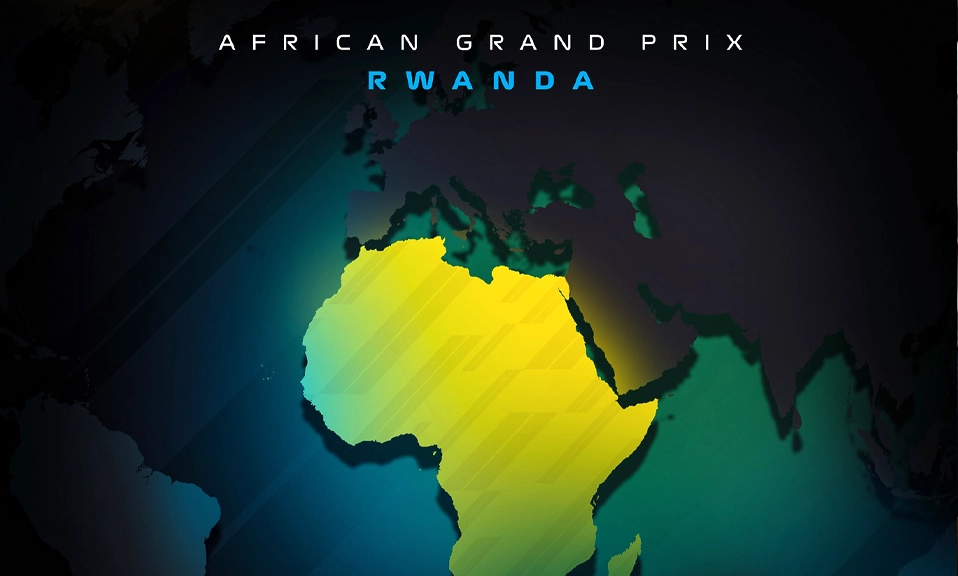
Africa has waited 33 years for Formula 1 to come home. On Tuesday, October 13, 2026, that wait finally ended. Rwanda will host the African Grand Prix from the early 2030s, under a landmark 10-year agreement that brings the world’s fastest sport back to a continent it abandoned in 1993. But this isn’t just a race. It’s a statement — about Africa’s place in global sport, about F1’s future, and about the power of a small, landlocked nation to rewrite its own story.
The announcement was made in Kigali by F1 President and CEO Stefano Domenicali, Rwandan President Paul Kagame, and FIA President Mohammed Ben Sulayem. “Today is a landmark moment for Formula 1,” Domenicali said. “With Rwanda joining the calendar from the next decade, our sport will race in every inhabited continent, bringing the world championship closer than ever to fans around the globe”.
The race will be called the African Grand Prix — not the Rwandan Grand Prix. That naming choice is deliberate. “We want to make it bigger than just Rwanda,” said Rwanda Development Board CEO Jean-Guy Afrika. “We want to make it the moment when the sport came back to Africa and then never left”.
The Deal: 10 Years, Early 2030s, 100,000 Seats
The agreement is a 10-year commitment, with the first race expected in the early 2030s — potentially as early as 2030. The circuit will be built in Bugesera, about 40 kilometres south of the capital Kigali, alongside a new international airport currently under construction and expected to open in 2028.
The venue is designed to accommodate approximately 100,000 spectators. But it’s not just an F1 track. It’s a multi-purpose facility with karting, off-road facilities, a driving experience centre, and spaces for concerts and exhibitions — a venue designed for year-round use.
“We want to make it bigger than just Rwanda,” Afrika said. “We want to make it the moment when the sport came back to Africa and then never left”.
The Circuit: “A Roller Coaster Track” With the Biggest Elevation Change in F1
The circuit is being designed by Tilke Engineering — the firm behind many of F1’s most iconic modern tracks — in collaboration with former F1 driver Alexander Wurz.
The layout is unlike anything on the current calendar. It’s a six-kilometre, anti-clockwise circuit with 17 corners, featuring 197 metres of elevation change per lap — nearly twice the elevation change at Spa-Francorchamps (102 metres). It’s the highest elevation gain of any circuit on the F1 calendar.
“It really is a roller coaster track with a lot of banking,” said Carsten Tilke, managing partner of Tilke Engineering. “It goes up and down 12 to 13 percent”.
The track will feature banked corners, a one-kilometre straight leading into a hairpin designed for overtaking, and a layout that integrates the area’s natural hills and a lake. The paddock will be terraced, using the natural topography and inspired by local villages and cultures.
“We were very, very lucky because it’s a very hilly topography,” Tilke said. “We have a lake. We have everything you dream of when you design a track”.
Wurz has already completed thousands of simulated laps, and several current drivers and world champions have tested the layout virtually. “Drivers would enjoy [it] and put it on their favourite list immediately,” he said.
Why Rwanda? The Long Road to Africa
Africa has been absent from the F1 calendar since 1993, when the South African Grand Prix was held at Kyalami. That was the last of 23 World Championship races in South Africa, which hosted F1 from 1967 to 1985 and again in 1992 and 1993. Morocco staged a single race in 1958.
For years, F1’s leadership has spoken about returning to Africa. Lewis Hamilton has been the sport’s most vocal advocate. “For the past six or seven years I’ve been fighting in the background to get a grand prix, sitting with stakeholders and asking the question: ‘Why are we not in Africa? There’s one on every other continent, why not Africa?'” he said this year.
Rwanda formally announced its bid in December 2024, when it hosted the FIA prize-giving gala in Kigali. “I am happy to formally announce that Rwanda is bidding to bring the thrill of racing back to Africa by hosting a Formula 1 Grand Prix,” President Kagame said at the time.
The bid was supported by Qatar, which helped back the project. South Africa was also in the running, but F1 chose Rwanda’s proposal — and its long-term commitment. South Africa’s sports minister, Gayton McKenzie, was gracious in defeat: “(Rwanda) have worked on it longer than (South Africa) and deserve it”.
The Significance: More Than a Race
The African Grand Prix is not just about motorsport. It’s about economic development, continental ambition, and the power of sport to reshape a nation’s image.
Rwanda has spent years investing heavily in sports. It has hosted the cycling world championships, the 2023 FIFA Congress, and the Basketball Africa League. It has sponsorship deals with Arsenal and Paris Saint-Germain. The F1 race is the culmination of that strategy — a signal to the world that Rwanda is open for business.
“The African Grand Prix will be an opportunity for young people across the continent to see themselves in the sport,” Kagame said. “As engineers, technicians, entrepreneurs and, one day, drivers”.
Domenicali framed the deal as a broader commitment. “Africa has always been part of Formula 1’s future, and from the beginning we were determined to return in the right way, with the right partner, a long-term commitment and a clear vision for creating meaningful impact”.
The Criticism: Sportswashing and Economic Priorities
The announcement has not been universally welcomed. Critics have accused Rwanda of “sportswashing” — using high-profile events to distract from human rights abuses, including a crackdown on opposition and dissent.
Amnesty International has been particularly vocal. Commenting on Rwanda’s sponsorship of Aston Villa, the organisation said: “The country is prolific in arbitrary detention, torture and the repression of free speech”.
There are also domestic concerns. A government source told AFP that “the economy is struggling” and that a quarter of the population lives below the poverty line. “For the Arsenal deal, government officials went on a media tour talking about it, but this time the temperature in the country is different so they are acting differently”.
Supporters of the deal point to the hypocrisy of Western criticism. “No one described this year’s World Cup in the United States as ‘sportswashing’, despite the country’s rights abuses,” one analysis noted.
What Happens Next
The circuit will be built alongside the new Bugesera International Airport, which is expected to open in 2028. Construction on the track will begin in parallel. F1 has committed to an early 2030s debut without specifying an exact year, allowing time for the circuit to be completed and authorised to FIA Grade 1 status.
The venue is expected to host not just F1 but MotoGP, WEC, and other championship races, making it a year-round motorsport destination.
Africa has waited 33
years for Formula 1 to return. Rwanda has delivered it.
The African Grand Prix is more than a race. It’s a statement — that Africa belongs on the world’s sporting stage, that a small nation can dream big, and that F1’s future is not confined to the traditional circuits of Europe and the Middle East.
The circuit in Bugesera will be unlike anything on the calendar — a roller coaster through the hills of Rwanda, with the biggest elevation change in F1 and 100,000 fans watching from the slopes. It will be fast, flowing, and uniquely African.
The challenges are real. The criticism is valid. The timeline is ambitious. But for the first time in a generation, the world’s fastest sport is coming home to the continent where it belongs.
“We want to make it the moment when the sport came back to Africa and then never left,” Afrika said.
If Rwanda delivers, it just might.