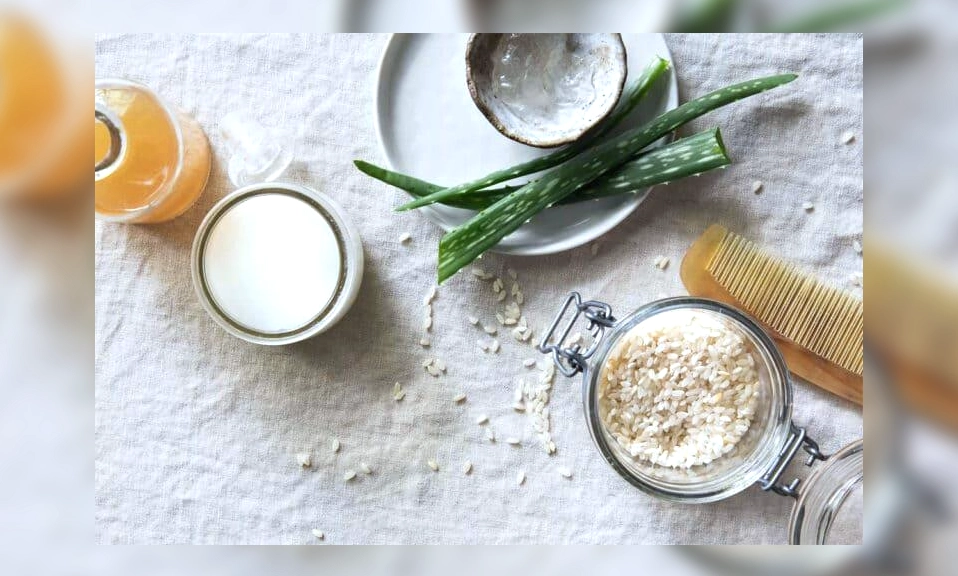
Your social feed is a pharmacy of home remedies. A sprig of rosemary simmered in water promises thicker hair. A bowl of rinsed rice promises silky, stronger strands. Clove water, okra water, ice facials—each one arrives with a viral testimonial and a promise that nature holds the answer to your beauty concerns. But behind the aesthetic appeal of these kitchen-counter treatments, a more complicated question is simmering: do they actually work, or are you just performing chemistry on your own disappointment?
The truth is not a simple yes or no. Some of these remedies have genuine, if modest, scientific backing. Others have almost none. And the gap between what the internet claims and what the evidence supports is wide enough to drive a delivery truck through. Here is what the science actually says about the most popular natural beauty remedies of 2026—and how to tell the difference between a trend worth trying and a trend worth skipping.
Rosemary Water: The Scalp Stimulant With a Weak Evidence Base
Rosemary water is everywhere. It has been one of the most Googled beauty hacks of the year, with countless before-and-after posts promising dramatic hair growth. The appeal is obvious: it is cheap, gentle, and easy to make at home.
The problem is that rosemary water itself has not been well studied in clinical trials for hair regrowth. The scientific attention has focused almost entirely on rosemary essential oil, and even those studies are limited and small. The foundational study—the one that launched a thousand TikTok videos—was a 2015 randomized trial comparing rosemary oil to 2% minoxidil in 50 men with androgenetic alopecia. After six months, both groups showed improvements in hair count, and the rosemary group reported less scalp itching.
That sounds promising, but there are critical caveats. The study used rosemary oil, not water. It included no women. And 2% minoxidil is not considered an effective concentration for male pattern hair loss—men generally need 5%. As trichologists have pointed out, the study is essentially saying rosemary oil is as effective as a solution that is ineffective. More recent animal research has found that rosemary derivatives can stimulate hair growth in mice even more than 5% minoxidil, but mouse models are not people, and the concentrations used in such studies are not comparable to a homemade infusion.
The verdict on rosemary water: It is a gentle, low-risk scalp rinse that some people find refreshing. It may support scalp health through mild anti-inflammatory and circulation-boosting effects. But there is no rigorous human evidence that rosemary water regrows hair, and it should not replace proven treatments for hair loss. If you enjoy using it, use it as a complementary step—not a primary solution.
Rice Water: The Fiber Strengthener With a Long Tradition
Rice water has been used in East Asian beauty traditions for centuries, and it remains one of the most searched natural hair remedies online. It is rich in amino acids, vitamins (B complex, C, and E), minerals (zinc, magnesium, selenium), and antioxidants.
The mechanism is different from rosemary. Rice water is not a scalp stimulant; it is a fiber treatment. The starch in rice water forms a light film on the hair surface that can temporarily smooth the cuticle, reduce surface irregularities, and create the impression of smoother, shinier, more coated hair. Traditional use and some laboratory research suggest it can also strengthen hair filaments, improve manageability, and even offer mild antifungal activity against the yeast that causes dandruff.
But here is the critical gap: to date, no clinical studies have evaluated the effects of using rice water on hair growth or hair density in humans. A comprehensive 2026 review of rice water in dermatology and hair care acknowledges its bioactive components and cosmetic potential, but the evidence for dramatic hair growth claims remains anecdotal. One fact-check concluded bluntly that there is not enough scientific evidence to say that rice water directly increases hair growth or makes hair grow faster.
There is also a practical risk. Applying rice water daily without rinsing can lead to a build-up of starch on the hair fiber, which can make hair duller or stiffer, depending on its porosity. The recommended approach is to use it as a rinse or a mask, leave it on for 10–15 minutes, and rinse thoroughly—starting with weekly applications to assess tolerance.
The verdict on rice water: It is a legitimate cosmetic treatment for temporarily improving shine, softness, and manageability. It is not a hair-growth remedy. If your goal is stronger, smoother-feeling hair, it may deliver modest, short-lived benefits. If your goal is to reverse baldness, it will not.
Clove Water and Okra Water: The Evidence Is Even Thinner
The same pattern repeats across the viral remedy landscape.
Clove water is promoted as a scalp treatment that can stop dandruff and boost microcirculation, thanks to a compound called eugenol. Eugenol does have antimicrobial and anti-inflammatory properties, and some research suggests it can inhibit Malassezia, the fungus responsible for dandruff. But there is no strong medical evidence that boiled clove water can dramatically increase hair growth, and frequent application of clove can irritate the scalp or induce contact dermatitis.
Okra water is the latest skin-glowing trend, with claims that drinking it improves complexion and supports collagen production. Okra does contain vitamins A and C, which are beneficial for skin. But the evidence for okra water specifically is 100% anecdotal. Scientists have not investigated the health benefits of drinking okra water, and none of the glowing-skin claims are backed up by direct research. Any improvement in skin is more likely due to the extra hydration from drinking more water in general.
The Real Problem: The Hype-to-Evidence Gap
The appeal of these remedies is understandable. They are cheap, accessible, and feel like a return to something natural and wholesome in an industry that often feels synthetic and expensive. But the viral beauty ecosystem has a structural problem: the claims outrun the science by a wide margin.
A study presented at the European Academy of Dermatology and Venereology Congress in 2026 found that nearly 95% of popular Korean skincare TikTok videos contained misleading claims, and a separate study linked social-media-inspired routines to dermatitis, acne flares, and even chemical burns. Another analysis found that 94.7% of viral “glass skin” videos contained at least one potentially misleading claim, and almost none mentioned irritation, sun protection, or seeing a dermatologist.
The issue is not that natural ingredients are inherently bad. The issue is that anecdote is not evidence, and a viral before-and-after photo is not a clinical trial. When a remedy is promoted as a miracle cure, the burden of proof should be high—and for most of these trends, that burden has not been met.
The Balanced Approach: What to Try and What to Skip
So, are viral natural beauty remedies worth trying? The honest answer is it depends on what you expect from them.
Try them if:
You are looking for a low-cost, low-risk addition to your routine that may offer modest cosmetic benefits (shinier hair, a calmer scalp, a refreshing rinse).
You understand that these are supportive treatments, not transformative cures, and you are not relying on them to reverse significant hair loss or skin conditions.
You patch-test first and stop if you experience irritation, itching, or any adverse reaction.
Skip them if:
You are experiencing significant hair thinning, baldness, or a persistent skin condition. These require a medical diagnosis and evidence-based treatment, not a kitchen experiment.
You are expecting rapid, dramatic results. The evidence for these remedies is modest at best, and the timelines in the studies that do exist are measured in months, not days.
You are sensitive to fragrance or prone to scalp irritation. Essential oils and plant extracts can be sensitizing, and “natural” does not mean “hypoallergenic.”
Rosemary water and rice
water are not worthless. Rosemary water may offer gentle scalp support and a pleasant ritual; rice water may temporarily smooth and strengthen the hair shaft. But neither is a proven hair-growth treatment, and the viral claims attached to them vastly exceed what the science supports. The same is true of clove water, okra water, and the endless parade of natural remedies that cycle through your feed.
The most powerful beauty tool you have is not a simmered herb or a fermented grain. It is skepticism tempered by curiosity—the willingness to try something gentle and low-risk, combined with the discipline to recognize when a trend is selling you a story rather than a solution. Enjoy the ritual. Manage your expectations. And if something is genuinely wrong with your hair or skin, see a professional who can give you answers that a TikTok video never will.