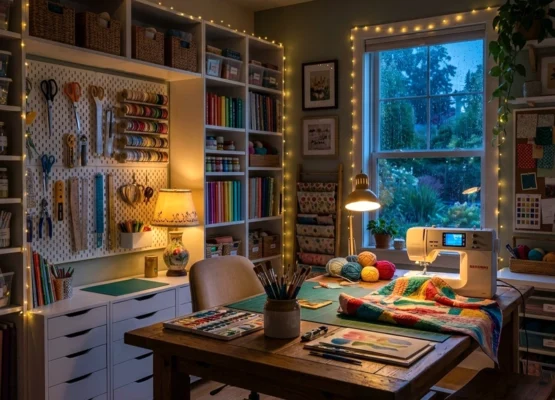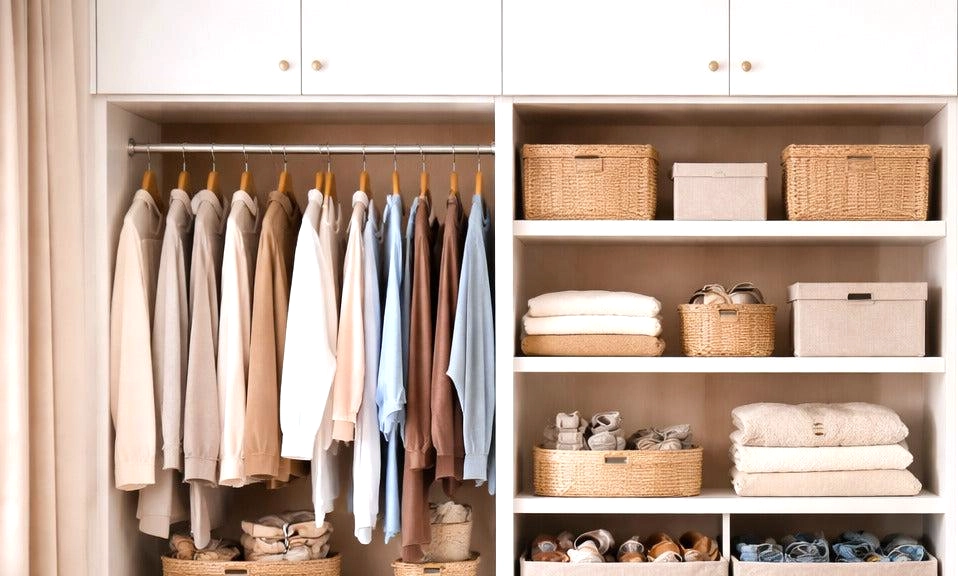
We’ve all been there. You’re standing in the aisles of a big-box home store, staring at a wall of beautiful, aesthetic plastic bins, woven baskets, and acrylic dividers. You load up your cart, take them home, and spend the weekend carefully arranging your stuff inside them.
You step back, admire your work, and think, “Finally, I’m organized.”
But here is the hard, uncomfortable truth: Buying storage boxes doesn’t make you organized. It just gives your clutter a matching outfit.
When you buy a bin to hold your “miscellaneous cables” or your “overflow of winter scarves,” you aren’t decluttering. You’re just hiding the problem. You are paying good money to store things you don’t use, don’t love, and don’t need, while simultaneously giving up precious square footage in your home to house them.
True organization isn’t about finding better places to put your stuff; it’s about having less stuff.
If you want to reclaim your space, your sanity, and your wallet, put down the credit card and stop buying bins. Here are 7 highly effective, psychology-backed decluttering tricks that actually work.
🛑 1. The “Would I Buy This Today?” Test
The Problem: We hold onto things because of the “sunk cost fallacy.” We think, “I paid $100 for this shirt,” or “This was a gift from my aunt,” so it feels wrong to throw it away. The Trick: Shift your mindset from what the item cost to what the item is worth to you right now.
Hold up the item and ask yourself: If I were standing in a store right now, looking at this exact item, would I buy it at its current retail price? If the answer is no, let it go. You already “bought” it, and you realized you didn’t want it. Don’t make the mistake twice by paying for it with your living space.
🍳 2. The “Duplicate Draft” Purge
The Problem: We keep multiples of things “just in case.” Three spatulas, four can openers, fifteen black t-shirts, and a drawer full of spare buttons from clothes we don’t even wear anymore. The Trick: Declare a “Duplicate Draft.”
Gather all the duplicates of a specific category (like kitchen tools or basic tees) and lay them out on the bed or counter. Force yourself to rank them. Keep only the absolute best, most functional, or most comfortable ones. The rest are just taking up space and making decisions harder. If you have four can openers, you don’t need a storage box for them; you need to donate three of them.
📸 3. The “Take a Photo” Protocol for Sentimental Clutter
The Problem: Sentimental items are the #1 reason people end up buying “memory boxes” and filling up attics. Kids’ artwork, old concert tickets, your college t-shirts, your grandmother’s chipped teacup. The Trick: Separate the memory from the physical object.
Your brain doesn’t need the physical object to hold the memory; it just needs a trigger. Take out your smartphone and take a beautiful, well-lit photo of the item. If it’s a stack of your child’s artwork, flip through it and take a video. Create a dedicated “Memories” digital album. Once the item is safely digitized, recycle, donate, or toss the physical object. You keep the memory, but you free up the shelf.
📄 4. The “Shred and Scan” Rule for Paper
The Problem: Paper clutter is the fastest-growing category of household junk, leading people to buy massive filing cabinets they only open once a year. The Trick: Go digital, ruthlessly.
We keep paper because we are afraid of needing it “someday.” But 95% of the paper we keep (instruction manuals, old bills, random receipts, brochures) is available online in seconds.
- Scan it: Use a free app on your phone to scan important documents (tax records, medical info, warranties) directly to the cloud.
- Shred it: If it’s not a vital legal document, birth certificate, or social security card, it goes in the shred bin. You don’t need a fancy filing box; you need a shredder.
⏱️ 5. The “20/20 Rule” for “Just in Case” Items
The Problem: We hoard random objects (a specific type of screw, a weird kitchen gadget, a single replacement tile) because we are terrified of the hypothetical future moment we might need it. The Trick: Adopt the minimalist “20/20 Rule.”
If an item can be replaced for less than $20 and can be replaced in less than 20 minutes (at a local store or with a quick online order), do not store it. Let it go. The amount of space and mental energy you spend storing and organizing “just in case” items is vastly more expensive than the $10 it would cost to just buy a new one if you actually needed it.
🗄️ 6. The “Drawer Boundary” Rule
The Problem: When a drawer gets full, our first instinct is to go buy an organizer (baskets, dividers, trays) to cram more stuff into it. The Trick: Let the furniture dictate the limit, not the other way around.
A drawer, a shelf, or a closet is a container with a fixed volume. When that container is full, the container is full. Period. If your “junk drawer” is overflowing, you don’t need to buy a bamboo organizer to fit more junk in it. You need to throw half the junk away until the drawer closes easily. Let the physical boundaries of your home force you to edit your belongings.
⚖️ 7. The “One In, One Out” Veto
The Problem: You finally declutter your closet, but six months later, it’s overflowing again because you keep buying new things without removing the old ones. This inevitably leads to buying under-bed storage boxes to hide the overflow. The Trick: Institute a strict household veto.
For every single new item that enters your home, an old item must leave. Buy a new pair of shoes? An old pair goes to the donation bin. Get a new kitchen gadget? The old one gets recycled. This creates a closed-loop system in your house. It forces you to be mindful about what you bring into your space, because you know you’ll have to give something up to make room for it.
Edit, Don’t Hide
The home organization industry makes billions of dollars a year convincing us that the secret to a peaceful home is buying better containers.
But a peaceful home isn’t created by hiding your excess in aesthetic bins. It’s created by letting go of the things that no longer serve you, so that the things you do love have room to breathe.
Next time you feel the urge to buy a storage box, stop. Look at what you’re trying to put inside it. Ask yourself the hard questions. Donate it, recycle it, or trash it. Your home (and your mind) will feel instantly lighter.