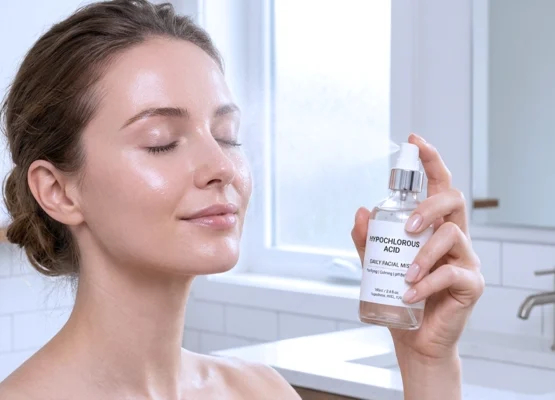
The original glass skin trend promised a complexion so smooth and reflective it looked like a mirror. In 2026, the goal has changed—and for the better. The new glass skin isn’t about perfection. It’s about health, resilience, and a glow that looks like it comes from within, not from a filter.
If you’ve been chasing the original glass skin ideal—ten steps, endless layering, and the impossible dream of invisible pores—you’ve probably noticed that it doesn’t work. The more you chase it, the further it recedes. That’s because the first generation of glass skin was built on a misunderstanding. The reflective finish was never the goal. It was the side effect of healthy, well-cared-for skin. Somewhere between Seoul and your social media feed, that nuance got lost, and the look became the objective while the process became optional.
In 2026, the industry is correcting course. Dermatologists, K-beauty experts, and brands are converging on a more sophisticated, more achievable interpretation: Glass Skin 2.0. It’s less about shine and more about substance. Less about the number of products and more about the right ones. And crucially, it’s less about looking like glass and more about feeling like skin that is genuinely thriving.
Here’s what’s changed, and how to get the glow in 2026.
What Is Glass Skin 2.0?
The original glass skin trend was defined by intense hydration, elaborate layering, and an extremely luminous surface. By 2026, that definition has expanded. As Vogue identified, the evolution is toward refined texture, minimized pore appearance, gentle resurfacing, and a supple skin feel that complements the glow. The glass skin of the future is defined as much by smoothness as by luminosity.
But there’s another shift happening alongside it. Korean beauty is moving beyond the mirror-like finish toward something more alive. The visual ideal now incorporates bounce—skin that looks plump, flexible, and elastic, not just reflective. Think “bouncy glow,” “cushion-plump skin,” and “juicy bounce”. The goal is no longer a lacquered surface. It’s a living, thriving ecosystem—skin that looks healthy because it is healthy.
A related trend, bloom skin, has emerged as the softer, more realistic successor to glass skin. Where glass skin aimed for an almost mirror-like finish, bloom skin celebrates a soft flush, a plump and bouncy texture, and a naturally radiant glow that looks lived-in rather than lab-perfect. It’s less about perfection and more about resilience, barrier strength, and repair.
The through-line across all of these evolutions is the same: skin health first, glow second.
The Three Pillars of the New Glass Skin
Forget the ten-step routine. The dermatological foundation of glass skin—old or new—rests on three things that have nothing to do with product count.
1. Barrier health. The skin barrier is the outermost layer, built from ceramides, fatty acids, and cholesterol arranged like bricks and mortar. When it’s intact, water stays in and irritants stay out. When it’s compromised, you get transepidermal water loss, sensitivity, and rough texture—the exact opposite of glass skin. As dermatologists emphasize, the barrier matters most because a compromised barrier scatters light unevenly and looks dull rather than luminous.
2. Real hydration. This isn’t about one heavy cream. It’s about layering moisture in thin layers—humectants to draw water in, emollients to smooth the surface, and occlusives to seal it all in. The order matters: thinnest to thickest, on damp skin, pressed in rather than rubbed.
3. Even tone. Melasma, post-inflammatory marks, and uneven pigmentation break up the reflective quality of light on the skin. Addressing tone—gently, over time—is part of the equation.
None of these require a shelf full of products. They require the right few, used consistently.
The 2026 Routine: Simplified, Barrier-First
The new glass skin routine is shorter, gentler, and more strategic than its predecessor. Here’s what it looks like.
Step 1: Cleanse Gently
Over-cleansing is one of the most common reasons people can’t achieve barrier-dependent results. Use a cleanser that doesn’t leave skin tight or squeaky. Double cleansing—an oil-based cleanser followed by a water-based one—is useful if you wear makeup or water-resistant sunscreen, but it’s not mandatory for everyone.
Step 2: Exfoliate, But Gently
The original glass skin trend often led people to over-exfoliate, damaging the very barrier they were trying to perfect. The 2026 approach is gentle resurfacing. Use a toner pad with a low concentration of PHA or LHA to sweep away rough texture without stripping the skin. Sensitive skin should exfoliate only once or twice a week. Chemical exfoliants like AHAs and BHAs are effective, but the key is moderation—overdoing it leads to redness, irritation, and breakouts.
Step 3: Soothe and Repair
This is the step the original trend often skipped. Before piling on hydrating serums, use a booster serum with centella asiatica or probiotics to calm and repair the skin barrier. This is especially important for sensitive skin, which is actually well-suited to the Glass Skin 2.0 approach because it prioritizes barrier health above all else.
Step 4: Hydrate Deeply
Choose a hyaluronic acid serum with small molecules that can actually penetrate, not just sit on the surface. Glycerin is another humectant hero, drawing water into the skin and holding it there. Apply to damp skin to give the humectants water to work with, and press the product in with your palms rather than rubbing.
Step 5: Seal It In (Lightweight)
Lock in the moisture with a lightweight gel cream or lotion, especially in warmer or more humid weather. Press on a thin layer—you don’t need a heavy occlusive if the earlier layers have done their job.
Step 6: SPF, Every Single Day
This step is non-negotiable. Sun damage is the fastest way to undo even tone, and it works against everything else in the routine. A broad-spectrum sunscreen is the foundation of any glass skin routine, full stop.
The Ingredients That Actually Matter in 2026
The ingredient landscape has evolved, but the fundamentals remain. Here’s what to look for—and what’s new.
The classics that still earn their place:
Hyaluronic acid and glycerin: Humectants that draw water into the skin.
Niacinamide (Vitamin B3): Supports the barrier, improves tone, and helps with texture.
Panthenol (Vitamin B5): Soothes and repairs.
Vitamin C: Supports collagen and brightens for an even, glass-like complexion.
Centella asiatica: Calms and repairs the barrier.
Ceramides: The building blocks of a healthy barrier.
The 2026 standout: PDRN
PDRN (polydeoxyribonucleotide) has become one of the defining ingredients of 2026. Derived traditionally from salmon DNA (though vegan alternatives now exist), it works by signaling skin to renew itself and support its own collagen and hyaluronic acid production. Unlike most skincare that adds something to the surface, PDRN prompts the skin to do more of its own work, which is why the effect builds over time. It’s showing up in toners, serums, sunscreens, and masks, and it’s become a key part of the Glass Skin 2.0 conversation.
Snail mucin and probiotics also have real barrier-support and hydration data behind them, though they’re supporting players rather than the main mechanism.
What Glass Skin Cannot Do (and Why That’s Okay)
The original glass skin trend sold a fantasy: invisible pores, flawless texture, a complexion that looks airbrushed in real life. That fantasy was never achievable, and chasing it often made skin worse.
Pores are not the enemy. They are a normal, permanent, and functional part of your skin. They deliver oil to the surface and keep it conditioned—a job you actively want done. Hydration and barrier health can make pores appear less visible because plumper skin sits more evenly around them and casts less shadow, but nothing shrinks a pore and nothing removes one. Any routine sold on that promise is selling something skin cannot do.
Real skin has texture. The glass skin you see online is often helped along by filters, flattering lighting, and editing. Results also depend on genetics, skin type, and environment—factors no routine controls.
More steps don’t mean better skin. For many people, a simplified routine works just as well and is easier to stick with. Consistency over intensity is the rule. A four-step routine done daily will comfortably outperform a ten-step routine done twice a week.
The K-Beauty Difference (and What the West Got Wrong)
The original glass skin philosophy was rooted in prevention over correction—gentle, consistent care and layered hydration applied as a matter of routine, rather than aggressive fixes deployed after a problem appeared. Traditional Western skincare often focused on “fixing” problems with harsh chemicals, while K-beauty prioritized prevention and hydration.
That distinction matters. The 2026 evolution is a return to the original philosophy: nourish the skin, protect the barrier, and let the glow follow. It’s the difference between a quick fix and a long-term glow.
Glass skin in 2026
is not about looking like a piece of glass. It’s about having skin that is healthy enough to reflect light evenly—skin with an intact barrier, real hydration, and even tone. The finish is a byproduct of that health, not a separate goal you chase independently.
The routine is simpler than you’ve been told. The ingredients are more targeted. And the expectation is more honest. You don’t need ten steps. You don’t need to erase your pores. You need to support your skin’s barrier, hydrate it properly, protect it from the sun, and be consistent.
The glow will follow. It always does.