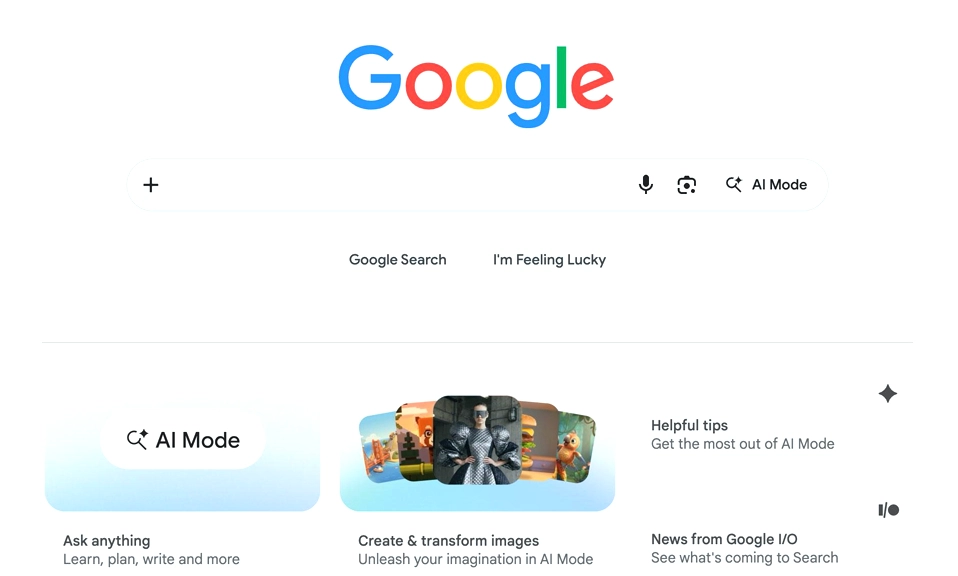
Google Search has always been a window to the public internet. You ask a question about the world, and it returns answers drawn from the world’s websites. But on November 23, 2026, Google quietly began dismantling that boundary. With a single announcement, Search’s AI Mode gained the ability to look inward—into your Google Wallet, your Google Drive, and your Gemini chat history—to answer questions that only you could ask, and that only your data could answer.
This is not a minor feature update. It is a fundamental shift in what a search engine is. Google is turning Search from a tool for finding public facts into a personal assistant that already knows your spending habits, your documents, and your unfinished thoughts. The implications—for how we search, for what we expect from AI, and for how much of ourselves we hand over to Google—are enormous.
What Actually Changed
The feature is an expansion of Personal Intelligence, the system Google introduced earlier in 2026 to let AI Mode draw context from Gmail, Calendar, and Photos. Until now, those were the only apps feeding the personalization engine. The new update adds three more: Google Wallet, Google Drive, and the Gemini app itself.
The rollout is staggered. Google Wallet integration went live immediately on November 23. Drive and Gemini app connections are “following in the coming weeks,” according to Google’s announcement. All three are strictly opt-in, managed through Search Personalization > Connected Apps, and can be toggled on or off at any time.
What It Means for Wallet: Your Spending, Analyzed
The Wallet integration is the most immediately useful—and the most sensitive. Once connected, AI Mode can read information from the cards and accounts stored in Google Wallet and use it to answer financial questions that would previously have required manual spreadsheet work or a dedicated budgeting app.
Google’s own examples are practical and grounded. You can ask which of your stored credit cards offers the best cash-back categories, travel perks, or reward points for a specific purchase. You can map out financial milestones and identify “actionable ways to trim everyday spending”. For anyone who has ever stood at a checkout counter wondering which card to swipe, or spent an evening reconciling statements to find where the money went, this is a genuinely useful capability.
But the privacy boundary is critical, and Google is being explicit about it. AI Mode can only read information from your Wallet. It cannot move, manage, or invest your money. The feature is an analysis layer, not a transaction layer. That distinction is what makes the integration palatable for users who would rightly be alarmed at the idea of an AI assistant with access to their bank accounts.
What It Means for Drive: The End of Document Hunting
The Drive integration addresses a different kind of pain. Important information is rarely in one place. It is scattered across Docs, Sheets, and PDFs—a budget spreadsheet here, a contract draft there, a tax document buried in a folder you haven’t opened in months.
Once Drive is connected, AI Mode can draw on those files to provide context-aware answers. Google’s flagship example is tax preparation: you can ask AI Mode to create a personalized preparation plan, and it will pull from the relevant documents in your Drive to build it. The feature turns Search into something closer to a research assistant that has already read your files—a capability that rivals, like ChatGPT, cannot match without direct access to the same personal data ecosystem.
What It Means for Gemini: Continuity Across Conversations
The third integration is the most conceptually interesting, even if its practical impact is less immediately obvious. Connecting the Gemini app to AI Mode means that context flows in both directions. If you explore an idea in the Gemini app, AI Mode will have that foundation to build on. If you start a research thread in Search, Gemini can pick it up later.
This is Google’s answer to a problem every AI user knows well: the friction of starting over. You brainstorm in one tool, research in another, and end up repeating yourself. By connecting the two, Google is trying to create a continuous thread of context that follows you across its AI products. It is not a dramatic feature on its own, but it is the glue that makes the other integrations more useful.
The Privacy Question: Transparency Tools and Lingering Concerns
Any feature that gives an AI access to your financial data and personal documents demands scrutiny, and Google has built several layers of control into the system.
The most visible is a new “Personalization” icon that will appear beneath AI Mode answers, showing you exactly which personal information contributed to a response. You can also correct outdated personal details directly in the conversation—telling AI Mode “I’m no longer a vegetarian,” for example, will update the context it uses.
But there is a less comfortable detail. Following October’s privacy policy update, data from apps connected to Personal Intelligence can influence the ads users see—though Google emphasizes that Gmail inbox messages and Google Photos libraries remain excluded from ad targeting. Wallet and Drive data, by implication, are not explicitly excluded from that ad-influence pipeline. Google has not said that Wallet or Drive data will be used for ads, but it has also not said they won’t. For users who opt in, that ambiguity is worth understanding.
The rollout is also geographically limited. At launch, the feature is restricted to personal Google accounts and is unavailable in Europe and the United Kingdom, where stricter privacy regulations may require additional compliance work.
The Bigger Picture: Search Becomes Personal
The Wallet and Drive integrations are not isolated features. They are the latest step in Google’s effort to redefine what Search is for. For two decades, Search was a retrieval engine: you asked, it found. AI Mode is trying to become something different—a reasoning engine that already has the context it needs to give you an answer, without you having to assemble that context yourself.
This is Google’s competitive advantage, and it knows it. Rivals like OpenAI can build powerful models, but they do not have a Wallet, a Drive, or a decade of Gmail history to draw on. By connecting those services to Search, Google is leveraging the “wealth of user data that’s already within its ecosystem” to deliver personalization that “rivals aren’t able to match”. Whether that is a compelling value proposition or a frightening concentration of power depends entirely on how much you trust Google with your data—and how well its transparency tools actually work.
A Powerful, Personal Search—With Strings Attached
The Wallet and Drive integrations make Google Search genuinely more useful for a specific class of questions: the ones that are about you. Which card should I use? Where did I put that document? What was I working on last week? These are questions that public web search was never designed to answer, and AI Mode now can—provided you are willing to connect the apps and accept the privacy trade-offs.
The feature is opt-in, read-only where it matters most, and equipped with transparency tools that give users a meaningful degree of control. That is a better privacy posture than many expected. But the ad-influence pipeline, the geographic limitations, and the sheer scope of data involved mean that opting in is a decision worth making deliberately, not reflexively.
Google has made Search personal. The question for users is whether personal is what they want—and whether the convenience is worth the cost.