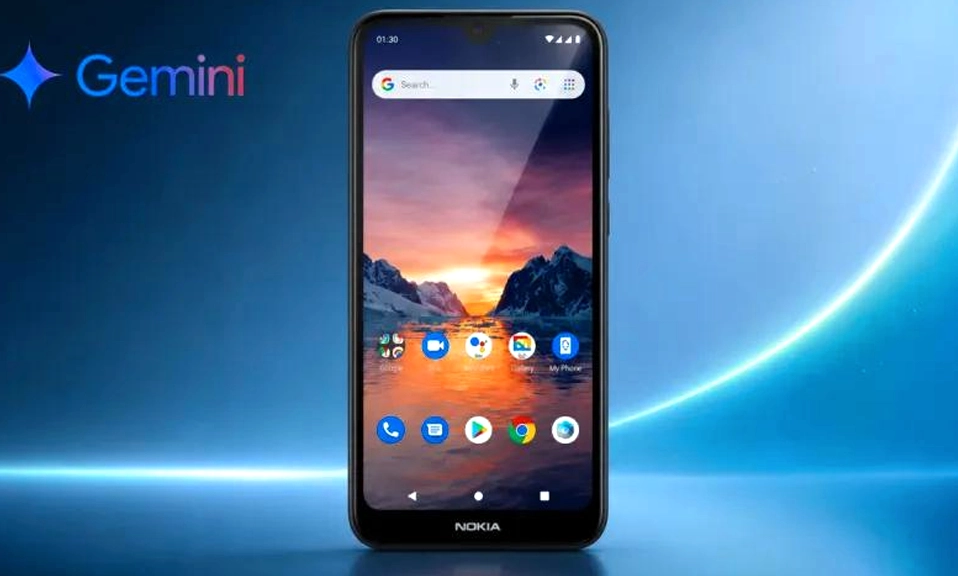
For years, the most advanced AI features on Android have been reserved for the most expensive phones. Google’s full Gemini Intelligence experience, with its on-device processing and agentic capabilities, requires a flagship chip and at least 12GB of RAM—a bar that excludes the vast majority of Android devices sold worldwide. That changed on November 19, 2026, when Google announced that the Gemini app can now run on Android Go phones with as little as 2GB of RAM, bringing a genuine AI assistant to the cheapest tier of the smartphone market.
The Technical Achievement: A Rebuilt App, Not a Smaller Model
The headline is simple, but the engineering behind it is not. Google did not shrink a frontier AI model to fit on a budget phone. Gemini Live, camera help, and Nano Banana image generation are all served from Google’s cloud, just as they are on every other handset. What Google re-engineered is the app’s memory footprint—the part that runs on the device. The company rebuilt the internal software architecture to keep the core conversational functionality intact without exhausting the limited RAM and processing power of Android Go devices.
That distinction matters for understanding what this is and isn’t. Budget phone users are not getting an on-device AI model. They are getting access to the same cloud-powered Gemini that flagship users interact with, delivered through an app that can run on hardware that would previously have crashed under the load. The constraint Google routed around was not intelligence or chip supply—it was 2GB of RAM.
What Budget Phone Users Actually Get
The features rolling out to Android Go devices are not a stripped-down afterthought. The rebuilt app brings Gemini Live—spoken conversations in more than 45 languages—along with camera help for notes and forms, and Nano Banana image generation. Users can hold down the Home or power button to interact with Gemini, and the assistant can handle tasks like sending texts, making searches, creating calendar events, getting restaurant recommendations, finding EV charging stations, and tracking daily routes. It also supports uploading documents, photos, and other files for context-aware responses.
This is a meaningful upgrade for people who, until now, were limited to basic, outdated voice commands through Google Assistant Go. The experience is not identical to what a Pixel 10 Pro user gets—some generative AI functions still rely on cloud processing and are not fully available on low-end hardware—but it is a genuine AI assistant, not a placeholder.
The Rollout and the Partners
The deployment is happening on two tracks. Existing Android Go users can download the optimized app directly from the Google Play Store. For new devices, Google has secured strategic partnerships with OEMs like Transsion—the company behind Tecno, Infinix, and itel, which are among the leading brands in price-sensitive Southeast Asian markets—to have Gemini preinstalled at the factory.
The expansion is not limited to Android Go. Throughout 2026, Gemini has been rolling out to budget and mid-range devices from Samsung and Motorola, including Galaxy A series phones and the Moto G line, through system updates and built-in app support. Separate from the Android Go announcement, MediaTek’s new Dimensity 8550 chipset is designed to bring Gemini Intelligence to “flagship killer” devices in the affordable premium segment, provided they meet the other requirements including 12GB of RAM. And Google’s own budget phone, the Pixel 10a, launched in March 2026 at $499, bringing Gemini-powered features to the company’s most affordable handset.
The Strategic Logic: The Next Billion Users
Google’s framing is about reach: “hundreds of millions more people”. That is plausible as a count of devices. The global smartphone market is still dominated by mid-range and entry-level segments, particularly in developing countries like Indonesia, India, and Latin America. For Google, putting Gemini on those phones is a defensive play to maintain default assistant dominance as AI becomes the primary interface for mobile computing.
But there is a harder economic reality beneath the announcement. AI queries currently monetize worse than traditional search results, and every new cloud-served Gemini user represents an ongoing inference cost in a Google data centre, not a one-time download. Alphabet’s AI strategy is prioritising software distribution over hardware, but the company faces $51 billion or more in quarterly capital spending and negative free cash flow despite strong operating income growth. The world’s cheapest AI users are, in a sense, a test case—not because they will decide Alphabet’s next quarter, but because they expose the economics underneath the user count.
The Paradox: AI Is Making Cheap Phones Scarce
There is a bitter irony at the heart of this story. The AI boom that made Gemini worth putting on an under-$100 phone is also making that phone harder to find. **Rising DRAM prices driven by AI data-centre demand** are accelerating the decline of sub-$100 smartphones. Southeast Asian shipments of ultra-cheap phones dropped 74% in the second quarter of 2026, and HBM4 memory costs are projected to rise 46% to 168% in 2026, compounding pressure on both the cheap phone market and AI infrastructure economics.
Google is bringing advanced AI to budget phones at precisely the moment when the economics of budget phones are becoming untenable. That does not make the announcement meaningless. It makes it a calculated bet that the software layer—the app, the cloud service, the distribution partnerships—can outpace the hardware constraints that are squeezing the entry-level market. Whether that bet pays off depends on whether the hundreds of millions of new users Google reaches actually return to Gemini, and whether the cost of serving them ever comes down enough to justify the investment.
A Genuine Milestone, With Caveats
For budget phone users, this is unambiguously good news. The gap between what a $500 phone and a $1,500 phone can do with AI has narrowed, even if it has not closed. A student in Jakarta or a small business owner in Lagos can now talk to Gemini in their own language, use the camera to parse a form, and generate an image—tasks that were previously reserved for devices costing three times as much.
For Google, the Android Go rollout is a strategic necessity dressed as a philanthropic gesture. It extends the company’s assistant dominance to the next billion users, tests the economics of mass-market AI, and positions Gemini as the default AI layer on Android at every price point. The technical achievement—rebuilding an app to run on 2GB of RAM without gutting its core functionality—is real and impressive. But the larger story is about the tension between distribution and sustainability. Google has proven it can put Gemini on almost any phone. The question now is whether the AI economy can afford to keep it there.