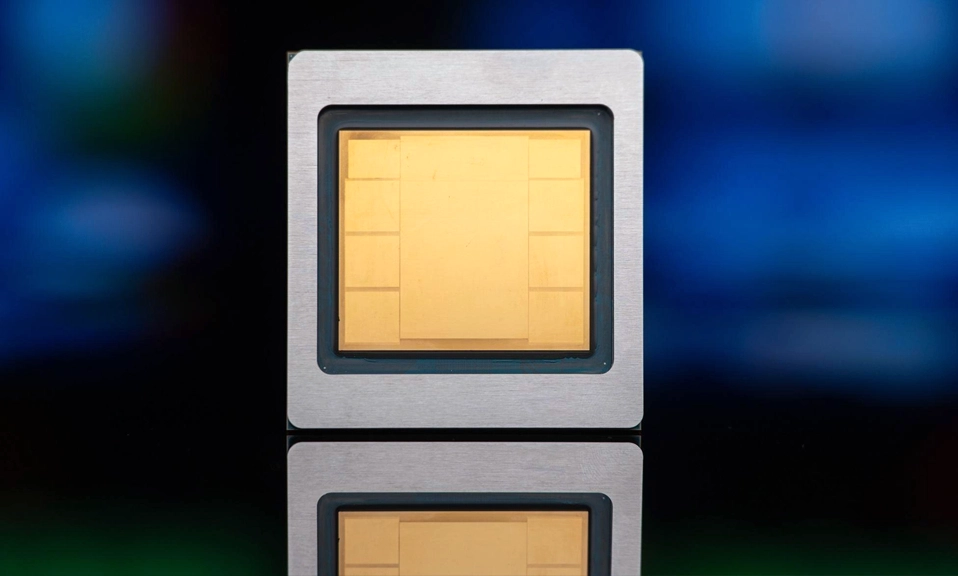
Google has just made its most aggressive move yet in the AI chip wars. On November 9, 2026, the company unveiled two new Tensor Processing Units—the TPU 8tx and TPU 8i Max—marking the first time it has introduced four TPU systems in a single year. It is a signal that Google is no longer content to be Nvidia’s largest customer. It wants to be Nvidia’s most credible competitor.
The announcement, which sent Alphabet shares up more than 3% in early trading, arrives at a moment of unusual vulnerability for the market leader. Nvidia is grappling with an investigation into CEO Jensen Huang’s relationship with a suspected Chinese spy, and its stock has fallen to its lowest level since April. Google, by contrast, is capitalising on its rapid ascent as a challenger, with Bloomberg Intelligence projecting TPU sales to rise from about $12 billion this year to more than $135 billion by 2028—an eleven-fold increase in just two years.
The question is no longer whether Google can build competitive AI chips. It is whether these two new systems, combined with a broader strategic shift, can finally loosen Nvidia’s grip on the market.
The Two New Chips: A Menu, Not a Monolith
Google’s strategy with the TPU 8tx and 8i Max is deliberate. These are not general-purpose chips designed to beat Nvidia on every benchmark. They are specialised systems tailored to two of the fastest-growing and most commercially valuable segments of the AI market: confidential computing and long-context inference.
TPU 8tx: Security Without Sacrifice
The TPU 8tx is built for government agencies, banks, healthcare providers, and any organisation that needs to process sensitive data while an AI model is actively working on it. It pairs Google’s TPU 8t silicon with customised AMD EPYC processors and uses hardware-level protections to isolate data and model parameters during processing.
The key achievement is that the security does not come at a performance cost. Google says the 8tx delivers up to twice the speed of the standard TPU 8t for some operations, with almost no performance penalty from its security measures. For enterprises that have been reluctant to move sensitive workloads to the cloud because of confidentiality concerns, this is a direct answer to their objection.
TPU 8i Max: Tackling the Memory Wall
The TPU 8i Max addresses a different bottleneck: memory. Modern AI agents and coding assistants need to process enormous context windows—entire codebases, hours of video, or long documents—and the limiting factor is often how much high-bandwidth memory (HBM) a chip can access.
Google’s solution is to combine two TPU 8i chips into a single package. The result is a doubling of computing power, on-chip SRAM, and HBM capacity and bandwidth. HBM capacity rises from 288 GB to 384 GB, while memory bandwidth doubles from 8.6 TB/s to 17.2 TB/s—packing significantly more capability into the same server rack footprint. SRAM capacity reaches 768 MB. Google says this makes the 8i Max suited for coding assistants, mathematical reasoning, scientific research, and drug discovery.
The Strategic Shift: From In-House Tool to External Weapon
The significance of these chips lies as much in Google’s business strategy as in their specifications. For years, Google kept its TPUs largely in-house to run its own services—Search, YouTube, and Gemini. That has changed. Google now rents TPUs to external customers through Google Cloud and, crucially, allows some customers to deploy TPUs directly in their own data centres.
The results are already visible. Google Cloud revenue more than doubled to $30.71 billion** in the third quarter of 2026, with Alphabet explicitly citing strong demand for its custom TPU systems as a key contributor. The TPU business now has nearly **100 customers**, including frontier AI laboratories, trading firms, retailers, and universities. Anthropic is the headline customer, with its IPO filing revealing about **$161 billion in lease payments tied to TPUs—making it the biggest custom-chip customer of Google’s design partner, Broadcom. Meta, OpenAI, and Oracle are also buyers.
This is the flywheel Google is trying to build: sell TPUs to cloud customers, use the revenue to fund the massive capital expenditure required to build more data centres, and use the scale to drive down costs and improve the chips. Alphabet spent $51.4 billion on capital projects in Q3 alone** and expects full-year 2026 spending to land between **$195 billion and $205 billion.
The Software Moat: Google’s Real Challenge
The biggest obstacle to challenging Nvidia has never been hardware. It is CUDA, the software ecosystem that has made Nvidia’s GPUs the default platform for AI development for over a decade. Developers write their code for CUDA, optimise it for CUDA, and hire engineers who know CUDA. Switching to a different chip architecture has historically meant rewriting code, retraining teams, and accepting a period of reduced productivity.
Google is attacking this moat directly. In October 2026, it open-sourced TorchTPU, a tool that enables PyTorch code and Hugging Face models to run natively on Google’s chips with minimal modification. It has also introduced an open-source TPU agent suite, currently in preview, that supports coding tools like Claude Code, Cursor, and Google Antigravity.
The strategy is clear: make it as easy as possible for developers who have built their workflows around PyTorch to try a TPU without a painful migration. If Google can lower the switching cost, it can start to erode the gravitational pull of CUDA.
The Competition: Nvidia’s Lead Is Still Formidable
Despite Google’s progress, the gap remains wide. Nvidia is estimated to hold 80% of the AI accelerator market by data centre revenue, with AMD at 7% or less. In raw computing power, Nvidia’s next-generation Rubin chip is rated at 35 petaflops, compared with about 10 for Google’s 8i and about 20 for the 8i Max, according to Yahoo Finance calculations.
Nvidia’s advantage is not just raw performance. It is the breadth of its ecosystem, the maturity of its software, and the sheer scale of its installed base. Google’s TPUs are optimised for specific workloads—inference, training, confidential computing, long-context processing—but they are less versatile than a GPU. For customers who need a single platform that can handle everything from training to inference to graphics, Nvidia remains the safer choice.
But Google does not need to replace Nvidia to succeed. It needs to carve out enough of the market to make its TPU business a meaningful counterweight—and to give customers a credible alternative that keeps prices in check. The early signs suggest it is doing exactly that.
A Credible Challenger, Not Yet a King
Can Google finally challenge Nvidia’s dominance? The honest answer is: it is closer than it has ever been, but “challenge” is not the same as “dethrone.”
The TPU 8tx and 8i Max are not Nvidia killers. They are precision tools for two of the fastest-growing segments of the AI market, backed by a company that is willing to spend hundreds of billions of dollars to build the infrastructure and the software ecosystem to support them. Google’s cloud revenue is doubling, its TPU customer list is growing, and its software strategy is directly targeting Nvidia’s greatest strength.
Nvidia’s lead is still enormous, and its position will not be undone by a single product launch. But the market is shifting. The AI boom is moving from training to inference, from general-purpose models to specialised agents, from a single dominant platform to a more diverse ecosystem of accelerators. In that environment, Google’s specialised, cost-efficient, and increasingly accessible TPUs have a genuine role to play.
Google is not the king of AI chips. But it is no longer just a customer. It is a competitor—and for the first time, Nvidia has a reason to look over its shoulder.
Do you think Google’s TPU strategy can meaningfully erode Nvidia’s market share, or will CUDA’s ecosystem lock-in keep Nvidia on top?