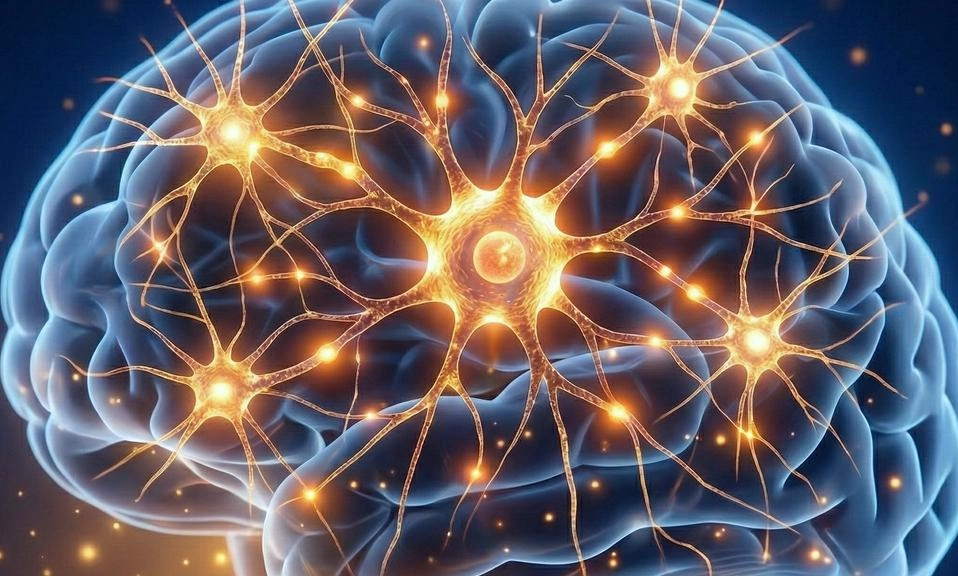
It is one of the strangest facts about the human body, and one that most of us accept without ever asking why. If you move your right hand, the command originates in the left hemisphere of your brain. If you feel a touch on your left cheek, the signal is processed on the right side of your cortex. The wiring is crossed—contralateral, in the language of neuroscience—and it applies to almost every voluntary movement and every conscious sensation in your body. The question of why the brain is wired this way has puzzled scientists for over two centuries. And while there is still no definitive answer, the leading theories point to a combination of evolutionary history, developmental biology, and the mechanical constraints of building a nervous system.
The phenomenon was first documented in the early 18th century, when physicians noticed that patients who suffered damage to one side of the brain often lost function on the opposite side of their body. The most famous early case was described by the English physician Thomas Willis in the 1660s, and the crossed organization was confirmed by experimental work in the 19th century. Since then, the fact of contralateral control has been established beyond doubt. The explanation for it remains one of the most debated questions in evolutionary neuroscience.
The Basic Architecture: A Crossed Brain
The human nervous system is bilaterally symmetrical. The brain has two hemispheres, left and right, which are connected by a massive bundle of nerve fibers called the corpus callosum. The body also has two sides, left and right, controlled by the muscles and supplied by the sensory organs on each side.
In a system with two of everything, you might expect the wiring to be straightforward: the left hemisphere controls the left side, and the right hemisphere controls the right side. That is how it works in most invertebrates—and in some vertebrates, too. But in humans and other mammals, the wiring is crossed. The left hemisphere controls the right side of the body, and the right hemisphere controls the left side.
This crossing occurs at a structure called the medulla oblongata, at the base of the brain. The nerve fibers that carry motor commands from the cortex to the spinal cord—the corticospinal tract—cross over to the opposite side at a point called the pyramidal decussation. The sensory fibers that carry information from the body to the brain also cross, though at different points along the spinal cord and brainstem. The result is a complete inversion: every signal that goes down to the body, and every signal that comes up from it, is processed on the opposite side of the brain.
Why? The Leading Theories
The question of why this crossing evolved has produced a range of explanations, none of which has been universally accepted. Here are the leading theories.
The Somatic Twist Theory
The most widely cited explanation is the somatic twist theory, first proposed by the neuroscientist Marcel Kinsbourne in the 1970s. The idea is that the crossing is a byproduct of the way the vertebrate body plan evolved.
Early vertebrates were bilaterally symmetrical and streamlined for swimming. Their nervous systems were arranged with the brain at the front and the spinal cord running down the back. At some point in the evolutionary history of vertebrates, the head end of the body underwent a 180-degree twist relative to the tail end. This twist would have rotated the brain’s orientation relative to the body, so that the left side of the brain ended up on the same side as the right side of the body, and vice versa. The crossing of the nerve fibers is, in this view, a developmental fossil—a relic of an ancient twist in the body plan.
The somatic twist theory has been criticized on several grounds. Critics point out that there is no fossil evidence for such a twist, and that the embryological development of vertebrates does not show any obvious sign of a 180-degree rotation. The theory has also been difficult to test experimentally. But it remains one of the most influential explanations, and it has been adapted and refined by other researchers over the decades.
The Visual Field Theory
A second major theory focuses on the visual system, which is also crossed. In vertebrates with eyes on the sides of their heads—like fish, amphibians, and reptiles—the visual fields of the two eyes overlap only slightly. Each eye sees the world on its own side. If the visual signals were processed on the same side of the brain as the eye that received them, the brain would have two separate maps of the world, one on each side, with little integration between them.
Crossing the visual fibers, however, allows each side of the brain to receive input from both eyes, creating a unified visual field. The right side of the brain sees the left visual field, and the left side of the brain sees the right visual field. This integration is crucial for depth perception, for detecting predators, and for coordinating movement in response to visual stimuli.
The visual field theory explains the crossing of the optic nerves—the fibers that carry signals from the eyes to the brain. But it does not, by itself, explain why the motor system is also crossed. Some researchers have argued that the motor crossing evolved to match the visual crossing, so that the brain’s sensory map and its motor map are aligned. If the visual system is crossed, the motor system must be crossed too, or the brain would have to perform a mental rotation every time it wanted to move toward something it saw.
The “No Good Reason” Theory
A third view, advocated by some evolutionary biologists, is that the crossing is not adaptive at all. It is a neutral byproduct of other developmental processes—a quirk of the way the nervous system develops that happened to get fixed in the vertebrate lineage and has never been strongly selected against. In this view, the question “why” is the wrong question. The crossing is a historical accident, not a functional design.
This view is supported by the fact that the crossing is not universal. Some invertebrates—like insects and cephalopods—have ipsilateral nervous systems, with each side of the brain controlling the same side of the body. Some vertebrates also have partial ipsilateral wiring. If the crossing were a strong adaptive advantage, you would expect it to be more consistently conserved across all animals with bilateral symmetry. The fact that it is not suggests that it may be a frozen accident—a feature that got locked in early in vertebrate evolution and has persisted ever since, not because it is better, but because it is difficult to change once it is established.
The “Better Integration” Theory
A more recent theory, proposed by researchers studying the evolution of the nervous system, argues that the crossing may have evolved to improve the integration of sensory and motor information across the body. In a crossed system, the left hemisphere controls the right side of the body, but it also receives sensory input from the right side. That means the same hemisphere is processing both the command to move a limb and the feedback from that limb. This may make it easier for the brain to learn and refine movements, because the sensory consequences of an action are processed in the same place as the action itself.
The theory is plausible, but it has been difficult to test. There is no direct evidence that a crossed system produces better motor learning than an ipsilateral one, and the computational advantages would need to be substantial to explain why the crossing evolved in the first place.
The Development: How the Crossing Happens
Whatever the evolutionary reason, the crossing has to happen during development, and the mechanism by which it occurs is better understood than the reason it evolved.
In the developing embryo, the nerve fibers that will form the corticospinal tract grow downward from the cortex toward the spinal cord. When they reach the base of the brain—the region that will become the medulla—they encounter a group of signaling molecules that guide them across the midline to the opposite side. The most important of these signals are netrin-1, which attracts the growing fibers toward the midline, and slit proteins, which repel them away from the midline after they have crossed.
The crossing is a precisely orchestrated developmental event. If the netrin or slit signaling is disrupted—by genetic mutation or by experimental manipulation—the fibers fail to cross, and the animal develops an ipsilateral motor system. Studies in mice have shown that the crossing can be altered by manipulating these molecular signals, producing animals with a nervous system that is wired differently from the normal vertebrate pattern.
The fact that the crossing is controlled by a specific set of molecular signals suggests that it is genetically programmed, not just a byproduct of physics or geometry. The genes that control the crossing are conserved across vertebrates, from fish to humans. This conservation suggests that the crossing has been maintained by natural selection for hundreds of millions of years—which, in turn, suggests that it does have some functional importance, even if we do not fully understand what that importance is.
The Exceptions: Where the Crossing Breaks Down
The contralateral rule is not absolute. There are several important exceptions.
The olfactory system is not crossed. Smell signals from each nostril are processed on the same side of the brain. This may be because the sense of smell is ancient and evolved before the crossing mechanism was established.
The cerebellum has a complex relationship with laterality. The cerebellum is involved in motor coordination, and its outputs are also crossed, but the pattern is different from the cerebral cortex.
The autonomic nervous system is not strictly crossed. The sympathetic and parasympathetic nerves that control internal organs are arranged bilaterally, with each side of the spinal cord controlling the same side of the body.
Some individuals have atypical lateralization. The most famous example is situs inversus, a condition in which the internal organs are mirrored left-to-right. People with situs inversus can have a reversed brain asymmetry as well, though the relationship is not straightforward.
And then there is the question of handedness. About 90 percent of people are right-handed, and in most of them, language is processed in the left hemisphere. The relationship between handedness, language lateralization, and the crossed motor system is complex, and it is still an active area of research.
A Mystery With a Clear Function
The question of why the brain is wired contralaterally is still unanswered in any definitive sense. The leading theories—the somatic twist, the visual field, the “no good reason,” and the integration hypothesis—each explain part of the phenomenon, but none has been conclusively demonstrated.
What is clear is that the crossing works. The human brain, with its crossed wiring, is capable of extraordinary feats of coordination, learning, and adaptation. Whether the crossing is an evolutionary accident, a functional adaptation, or a bit of both, it is a fundamental feature of the vertebrate nervous system—one that has been conserved for hundreds of millions of years and that shapes every movement and every sensation of our lives.
The next time you reach for a cup with your right hand, remember: the command came from the left side of your brain. The touch of the handle was processed on the right side. And somewhere in the deep evolutionary history of vertebrates, a twist, a crossing, or an accident set the pattern that makes it all possible. The mystery is not why the brain is crossed. It is why we ever thought it should not be.