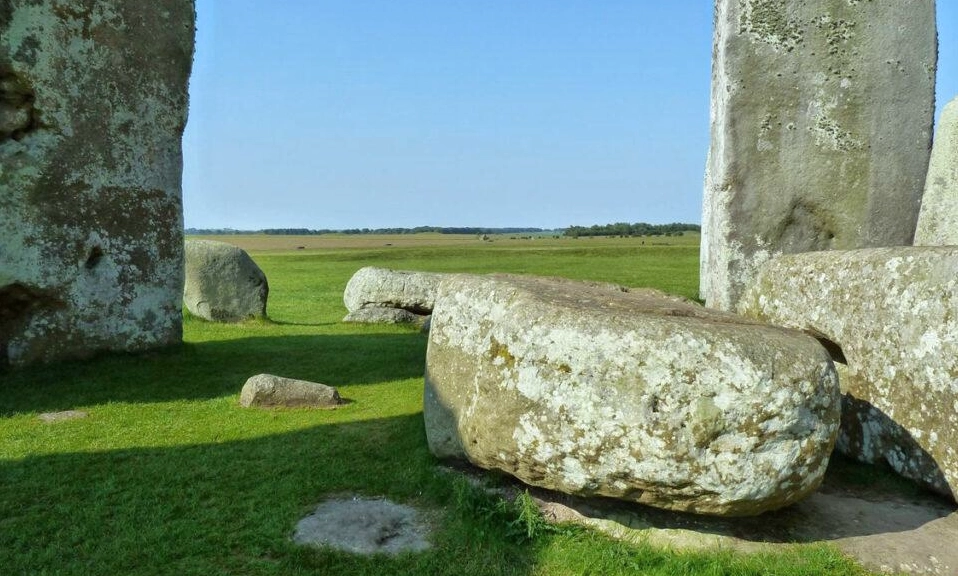
For nearly a century, the story seemed settled. The six-tonne slab of sandstone at the heart of Stonehenge—the Altar Stone—was thought to have travelled from west Wales, alongside the smaller bluestones that form the monument’s inner circle. Then, in 2024, a study published in Nature made a jaw-dropping claim: the Altar Stone came from northeast Scotland, more than 400 miles away. It was a discovery that rewrote the story of Neolithic Britain’s connections and ambitions. And now, in November 2026, that theory has been overturned. The Altar Stone’s origins are, once again, a mystery—and the search for its source has become one of the most dogged geological detective stories in British archaeology.
The latest twist comes from a study published in the Journal of the Geological Society, led by Professor Duncan Pirrie of the University of South Wales. His team conducted what he calls “the most comprehensive geological investigation of the Altar Stone ever undertaken”, combining direct examinations of the stone with analyses of museum fragments, and evaluating its sedimentology, geochemistry, and mineralogy to build a “geological fingerprint” of the slab. They then travelled across the Orcadian Basin in northeast Scotland—the region identified in the 2024 study—collecting around 70 rock samples to compare against that fingerprint. None of them matched. “So far, none of the locations examined have the same set of characteristics as the Altar Stone,” Pirrie said. “That tells us the search is not over, but we are now far better equipped to focus on the areas most likely to yield an answer”.
The Mystery in Brief
Stonehenge was built in phases between 3000 and 1600 BC. The large outer sarsen stones were sourced locally from the Marlborough Downs, about 25 kilometres away. The smaller inner bluestones were traced to the Mynydd Preseli area of west Wales, roughly 225 kilometres from Salisbury Plain. The Altar Stone, however, never fit that pattern. It is a grey-green micaceous sandstone of Old Red Sandstone age, geologically distinct from the Welsh bluestones and from the local sarsens. For decades, its origin was an anomaly.
The 2024 Scottish Bombshell
The 2024 Nature study, led by researchers from Curtin University and Aberystwyth University, analysed the detrital zircon ages in the Altar Stone—tiny crystals that act as a geological signature, recording the age of the rocks from which the sandstone’s grains were originally eroded. The zircon age spectra showed a remarkable similarity to the Old Red Sandstone of the Orcadian Basin in northeast Scotland—a source at least 750 kilometres away. The study concluded that the stone was anthropogenically transported by Neolithic people, not carried by glaciers. The claim was dramatic: it implied a level of long-distance organisation, maritime capability, and cultural connection in Neolithic Britain that many archaeologists had thought impossible for the period.
Why the Scottish Theory Was Overturned
The 2026 study did not challenge the 2024 zircon data. It challenged the interpretation of that data. The Orcadian Basin is vast—thousands of square kilometres—and the 2024 study identified it as a broad source region, not a specific outcrop. The 2026 team’s fieldwork was an attempt to find an exact match within that basin. It failed.
Crucially, the 2026 study also examined the geochemistry of the stone more closely. As a reply paper in ScienceDirect noted, “there are significant differences in some element abundances” between the Altar Stone and the northeast Scotland samples, leading to the conclusion that “the Altar Stone is not from northeast Scotland”. The geological fingerprint—the combination of sedimentology, mineralogy, and isotopic composition—did not align with the Orcadian Basin, even though some individual signals (like the zircon ages) had suggested a connection.
Where Does That Leave Us?
The search has not ended. It has narrowed. Pirrie’s team concluded that the Altar Stone definitely did not come from southern Britain—which rules out the long-standing Welsh hypothesis and any local source. It also concluded that northeast Scotland is “very unlikely”. The remaining possibilities, according to the researchers, include:
Elsewhere in Scotland. The stone may still be Scottish, just not from the Orcadian Basin. Other Old Red Sandstone outcrops exist in Scotland, and the zircon data may yet match one of them.
Northern England. There are Old Red Sandstone sequences in northern England that have not been ruled out.
Ireland. The Dingle Peninsula Basin in southwest Ireland has been cited as another potential source with comparable geology.
The 2026 study does not claim to have solved the mystery. It claims to have eliminated a leading candidate—a necessary step in any geological detective story. “In a geological detective story such as this, ruling out potential source areas is just as important as identifying new ones,” said Nick Pearce of Aberystwyth University, a co-author on both the 2024 and 2026 studies. “Every location eliminated narrows the search and brings us closer to discovering where the Altar Stone originated”.
Why the Answer Matters
The Altar Stone’s origin is not just an academic curiosity. It is a question about how Neolithic Britain worked. If the stone came from Scotland, it implies that the communities who built Stonehenge were connected across hundreds of miles—sharing ideas, resources, and labour on a scale that challenges traditional narratives of isolated local tribes. If it came from somewhere else, the network may have been different, but the implication of long-distance movement remains. Either way, the stone’s journey is a testament to the ambition and organisation of people who lived more than 4,000 years ago.
The 2026 study also addressed the mode of transport. Glacial drift was considered as an alternative to human transport, but ice-flow modelling showed that no direct glacial route existed from northeast Scotland to Salisbury Plain. Even under a glacially assisted scenario, “substantial anthropogenic transport would have remained necessary”. The stone was moved by people—by sledge, by boat, or by a combination of both—over a distance that required planning, cooperation, and a timescale measured in years or generations.
A Mystery That Refuses to Be Solved
The Altar Stone has now been linked to Wales, then to Scotland, and now to nowhere in particular. Each study has narrowed the search, but none has found the source. The 2026 research is a model of how science works: a bold hypothesis, a rigorous test, and a conclusion that overturns the hypothesis without replacing it with a new certainty.
What remains is a six-tonne slab of sandstone at the centre of one of the world’s most famous monuments, with a geological signature that does not match any of the locations that have been tested. The search will continue—in the remaining outcrops of Scotland, in northern England, and perhaps in Ireland. The answer, when it comes, will not just identify a quarry. It will tell us something about the people who dragged, sailed, and hauled a piece of their world across Britain to build a monument that has lasted for millennia.