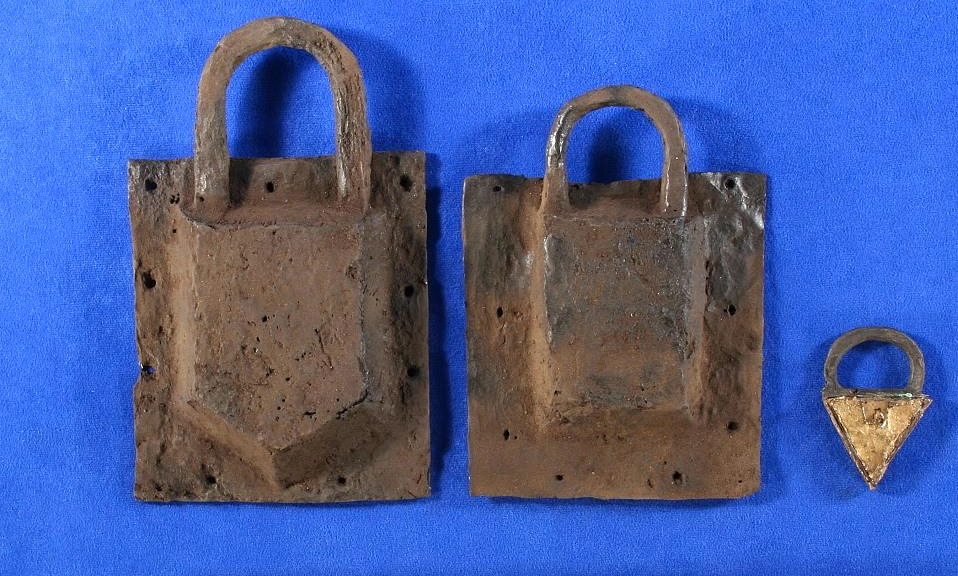
For four centuries, it has been a silent guardian of a secret. Recovered from the wreck of a Spanish galleon that sank off the coast of Florida in 1622, the padlock is a small, corroded lump of iron and bronze—unremarkable to the eye, but extraordinary in what it represents. It was found locked, and for nearly 400 years, it stayed that way. This week, a team of conservators and engineers finally opened it. What they found inside has stunned historians and raised new questions about the people who sailed on the doomed ship.
The padlock was recovered in 1985 from the wreck of the Nuestra Señora de Atocha, a Spanish treasure galleon that sank in a hurricane near the Florida Keys on September 6, 1622. The ship was carrying a vast cargo of silver, gold, and emeralds from the Americas to Spain, and its loss was one of the most devastating maritime disasters of the colonial era. The wreck was discovered by treasure hunter Mel Fisher in 1985, and thousands of artifacts have been recovered since—but this padlock has remained an enigma.
For decades, it sat in a conservation lab at the Florida Museum of Natural History, too fragile to force open without risking its destruction. The iron shackle was fused to the bronze body by centuries of corrosion. The keyhole was clogged with mineral deposits. X-ray imaging revealed the internal mechanism was intact but seized. Opening it required a solution that combined materials science, engineering, and a deep respect for the artifact’s historical integrity.
Why It Took 400 Years
The challenge was not simply that the lock was old. It was that the lock was corroded in a way that made conventional opening techniques impossible.
When iron and bronze corrode in seawater, they form a complex layer of oxides, chlorides, and sulfides that can weld moving parts together. The shackle—the U-shaped bar that secures the lock—had become chemically bonded to the lock body. The internal springs and levers, made of iron, had rusted into a solid mass. The keyhole, which would have accepted a small, ornate key, was filled with a dense concretion of sand, shell fragments, and corrosion products.
“You can’t just pick a lock like this,” explained Dr. Elena Vasquez, the lead conservator at the Florida Museum. “The mechanism isn’t frozen because it’s stuck. It’s frozen because the metal itself has changed. The iron has oxidized and expanded. The bronze has developed a patina that’s harder than the original metal. Forcing it would have destroyed the lock and everything inside.”
The Breakthrough: Micro-CT and Chemical Softening
The team’s breakthrough came from a combination of technologies that were not available when the lock was first recovered.
First, they used micro-computed tomography (micro-CT) —a high-resolution X-ray scanning technique that can create a 3D model of an object’s interior without opening it. The scan revealed the exact position of the internal mechanism, the thickness of the corrosion layers, and—crucially—a small, empty space inside the lock body where something could have been stored.
Then, they developed a targeted chemical softening protocol. Instead of immersing the entire lock in a solution, they used a fine needle to apply a chelating agent—a chemical that binds to metal ions and gently dissolves corrosion products—directly to the keyhole and the seam between the shackle and the body. The process took six weeks of careful, controlled application, with the lock monitored daily to ensure the treatment was not damaging the original metal.
Finally, they designed a custom micro-manipulator—a tiny robotic tool that could reach into the keyhole and gently manipulate the internal levers without applying force to the corroded shackle. The manipulator was guided by the micro-CT scan, allowing the conservators to “see” inside the lock as they worked.
The Moment of Opening
On November 5, 2026, in a climate-controlled lab at the Florida Museum, the team gathered around the lock. The manipulator was inserted into the keyhole. The internal levers were engaged, one by one, following the sequence revealed by the CT scan. There was a soft click. The shackle, freed after four centuries, lifted away.
“It was a moment of pure silence,” Vasquez recalled. “Then everyone started breathing again.”
Inside the lock body, the team found a small, tightly folded piece of parchment—no larger than a thumbnail—preserved by the anaerobic, dry environment inside the lock. The parchment was fragile, darkened by age, and partially degraded, but the text was still legible.
What Was Inside
The parchment contained a handwritten list of names and numbers. It appears to be a partial inventory or ledger, possibly kept by a ship’s officer or a passenger. The names are Spanish, and the numbers are consistent with quantities of goods—silver pesos, arrobas of wine, or perhaps enslaved people. The text is dated August 1622, just weeks before the Atocha sank.
“This is not a treasure map,” said Dr. Marcus Webb, a historian at the University of Florida who is analyzing the document. “It’s something more valuable. It’s a record of human lives and economic transactions from a moment in history that we thought was lost. It tells us who was on that ship, what they were carrying, and how they were connected to the colonial economy.”
The parchment is now undergoing conservation and analysis. The team hopes to identify the names, cross-reference them with historical records, and perhaps trace the descendants of the people listed. The numbers may help historians reconstruct the cargo and the financial networks that underpinned the Spanish colonial empire.
Why This Matters
The padlock is not a unique artifact. Thousands of locks, keys, and personal items have been recovered from shipwrecks around the world. But the Atocha padlock is special because it was locked and sealed—a time capsule that preserved its contents in a way that open artifacts cannot.
“Every shipwreck is a moment frozen in time,” Webb said. “But this is a moment that was deliberately concealed. Someone locked this padlock and kept the key. They wanted whatever was inside to be safe. We don’t know if they survived the hurricane, but their secret did.”
The discovery also highlights the importance of patient, non-destructive conservation. The padlock could have been opened decades ago with a hammer and a chisel. It would have been destroyed in the process, and the parchment inside would have been lost. The decision to wait—for better technology, for better techniques, for a better understanding of the materials—has paid off.
A 400-year-old padlock from
the wreck of the Nuestra Señora de Atocha has finally been opened, revealing a fragile parchment that offers a rare glimpse into the lives and commerce of the Spanish colonial era. The lock’s contents are not gold or jewels, but something more valuable: a record of human names and numbers, preserved by chance and recovered by science.
The padlock is now on display at the Florida Museum of Natural History, alongside the parchment it protected for four centuries. It is a small object, easily overlooked. But it is a reminder that history is not only written in grand monuments and official documents. Sometimes, it is locked away in a rusted box, waiting for someone to find the patience and the tools to open it.