In the early 2000s, Dubai announced a project that sounded less like real estate development and more like the plot of a James Bond villain’s lair.
They were going to build a replica of the world map out of sand.
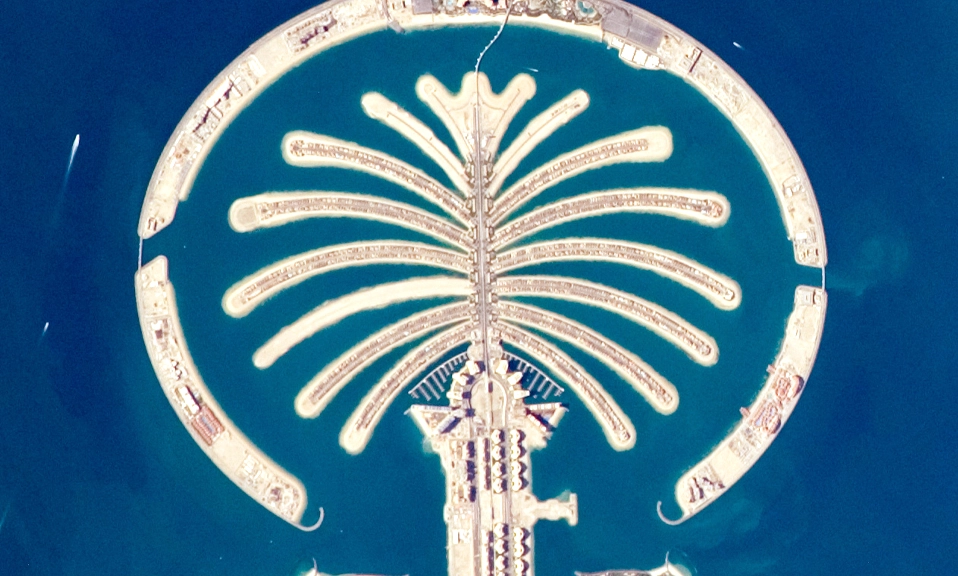
Dubbed “The World” islands, the project consisted of 300 small, artificial islands arranged to look like the continents, located about 2.5 miles off the coast of Dubai. Alongside the already ambitious (and largely successful) Palm Jumeirah, it was touted as the ultimate symbol of human ingenuity, limitless wealth, and the triumph of engineering over nature.
Fast forward to today, and the reality is starkly different. Satellite images reveal that many of these islands remain barren, eroding sandbars. Some have sunk slightly below the waves. The grand vision of a bustling, luxurious global archipelago has largely stalled, earning the project a reputation as one of the most spectacular missteps in modern real estate history.
But why did it fail? It wasn’t just one thing. It was a perfect storm of economic collapse, logistical nightmares, and Mother Nature fighting back.
Here is the unvarnished truth behind the sinking dream of Dubai’s artificial islands.
📉 1. The 2008 Financial Crash: The Party Ended
The most immediate cause of the islands’ stagnation was the 2008 global financial crisis.
When the project was announced in 2003, the global economy was booming, and developers were throwing money at Dubai. But when the housing bubble burst, credit dried up overnight. Dubai’s own real estate market crashed, with property values plummeting by up to 50%.
Developers who had bought plots on “The World” islands suddenly found themselves bankrupt or unable to secure funding. Construction halted. The grand master plan was abruptly replaced by a desperate scramble for survival, leaving dozens of islands as empty, abandoned patches of sand.
🌊 2. Mother Nature Fights Back (The Environmental Disaster)
You can move sand, but you cannot easily rewrite oceanography. The construction of these islands ignored fundamental coastal dynamics, leading to severe environmental blowback.
- Stagnant Water: The islands were packed so closely together that they blocked natural tidal flows. The water between the islands became stagnant, leading to foul odors, algae blooms, and a breeding ground for mosquitoes.
- Coastal Erosion: The massive breakwaters built to protect the islands disrupted the natural movement of sand along the Dubai coastline. This caused severe erosion on the mainland beaches, requiring the government to spend millions on constant, artificial beach replenishment.
- Marine Life Destruction: The process of “rainbowing” (spraying millions of tons of sand and rock into the sea) smothered existing coral reefs and seagrass beds, devastating the local marine ecosystem.
Nature, it turns out, does not like being reshaped into a cartographic novelty.
🏗️ 3. The Logistical and Maintenance Nightmare
Building on solid ground is hard. Building on loose sand in the middle of the sea is a logistical nightmare.
Every single island required its own independent infrastructure. There were no existing pipes or cables. Developers had to figure out how to run freshwater, sewage treatment, electricity, and internet to tiny, isolated plots of land surrounded by saltwater.
Furthermore, sand is not a stable building material. The islands are constantly subjected to wave action and wind erosion. Maintaining them requires continuous, exorbitantly expensive dredging and sand replenishment. For many investors, the ongoing maintenance costs quickly outweighed any potential profit, leading them to abandon the projects entirely.
👻 4. The “Ghost Island” Phenomenon
Even when construction did happen, a fundamental flaw in the concept emerged: nobody actually wanted to live there.
The islands were marketed as ultra-exclusive, private retreats. But “exclusive” quickly turned into “isolated.” Residents complained about the lack of community, the difficulty of getting basic supplies, and the fact that their “private paradise” was surrounded by the decaying, empty islands of bankrupt neighbors.
The romance of living on a map faded when faced with the reality of a 20-minute boat ride just to buy a gallon of milk.
🔄 The Nuance: Is It a Total Failure?
To be fair, it’s not a complete wasteland. The narrative of “total failure” applies mostly to “The World” islands.
The Palm Jumeirah, while also facing environmental and erosion challenges, is largely considered a success. It is densely populated, features luxury hotels (like the iconic Atlantis), and has become a globally recognized landmark.
Furthermore, in recent years, there has been a modest revival of “The World” islands. Developers like the Kleindienst Group have stepped in to build “The Heart of Europe,” a subset of islands featuring Venetian-style canals, floating seahorse villas, and snow-capped indoor environments. It is a fraction of the original 300-island vision, but it proves that with realistic scaling and massive capital, some development is possible.
The Limits of Hubris
The story of Dubai’s artificial islands is a modern cautionary tale. It is a story of what happens when limitless ambition collides with the rigid laws of economics and physics.
It reminds us that no amount of money can permanently suspend the rules of nature. Sand will wash away. Water will stagnate. And financial markets will eventually correct.
Dubai’s skyline remains a marvel of human achievement, but the empty, eroding islands off its coast stand as a quiet, sinking monument to the danger of believing we can simply engineer our way out of reality.