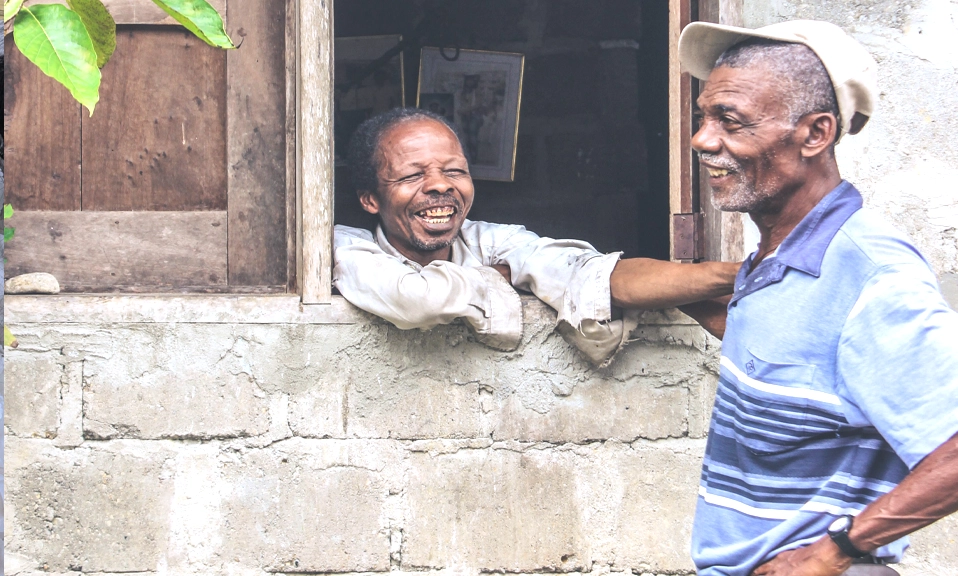
What Happens When Privacy Disappears
Imagine a place where your neighbor knows what time you woke up, what you argued about last night, and how much you paid for your new car. Where the barista asks about your mother’s surgery because she heard it from the pharmacist, who heard it from your cousin. Where your past mistakes are not buried in the past but are part of the collective memory, ready to be resurrected at any moment.
For most of human history, this wasn’t a thought experiment. It was simply life. Small villages, tight-knit communities, extended families — these were the environments in which our species evolved. Privacy, as we understand it today, is a modern invention. The idea that you could live among hundreds of people who know nothing about you is a product of urbanization, anonymity, and the digital age.
But as we scroll through social media, where everyone from our high school nemesis to our third cousin’s roommate can see our vacation photos and political opinions, the village has returned. Only now, it’s global. And it’s making us ask uncomfortable questions about what we gain — and what we lose — when privacy disappears.
The Comfort of Being Known
Let’s start with the obvious: there are real benefits to living in a place where everyone knows everyone.
In his book The Village Effect, psychologist Susan Pinker argues that face-to-face contact in tight-knit communities is one of the strongest predictors of health and happiness. People in close-knit villages live longer. They recover from illness faster. They report higher levels of trust and lower levels of anxiety. The reason is simple: humans are social animals. We are not designed to go it alone.
In a village where everyone knows you, you are never truly alone. If your car breaks down, someone will lend you theirs. If you’re sick, someone will bring you soup. If you’re grieving, someone will sit with you in silence. There is a safety net that no government program can replicate. It’s woven from relationships, not bureaucracy.
There’s also a certain freedom in being known. You don’t have to explain yourself. Your quirks are accepted, your history is understood, your place in the social fabric is secure. In a world where so many people feel invisible, the village offers visibility.
The Tyranny of the Collective Gaze
But the same gaze that sees you can also judge you.
In a village where everyone knows everyone, nothing is private. Your failures are public. Your mistakes are remembered. Your attempts to reinvent yourself are met with skepticism, because everyone knows who you used to be. The collective memory is long and unforgiving.
This is the dark side of the fishbowl. In small communities, conformity is often the price of belonging. You don’t step out of line because you know the gossip will follow. You don’t challenge the consensus because you know you’ll be labeled. You don’t pursue an unconventional path because you know the whispers will reach your family before you’ve even had a chance to explain.
Sociologists call this “the strength of weak ties” versus “the weakness of strong ties.” Strong ties — the deep, enduring bonds of family and village — provide support but also impose constraints. Weak ties — the casual, transient connections of city life — offer freedom but also isolation. The village is all strong ties. And strong ties can feel like chains.
The Mental Health Toll
There’s a reason so many people flee small towns. The lack of privacy, the constant scrutiny, the feeling that you can never truly be yourself — these are not minor inconveniences. They are sources of genuine psychological distress.
In a 2025 study published in the Journal of Community Psychology, researchers found that people in tight-knit rural communities reported higher levels of social support but also higher levels of “social anxiety” and “fear of judgment.” The same relationships that provided comfort also created pressure. The same people who would help you in a crisis were also the ones who might gossip about you behind your back.
This tension is particularly acute for people who don’t fit the norm. In a village where everyone knows everyone, being different is not just uncomfortable. It can be dangerous. LGBTQ+ youth in rural areas, for example, face higher rates of depression and suicide than their urban counterparts. The village that supports also polices.
The Digital Village: We Rebuilt the Panopticon
For those of us who live in cities, the village might seem like a distant memory. But we’ve rebuilt it online.
Social media platforms are, in essence, digital villages. They are places where everyone knows everyone — or at least, everyone can see everyone. Your Facebook friends know your relationship status. Your Instagram followers know where you went on vacation. Your LinkedIn connections know when you changed jobs. Your Twitter followers know what you think about politics, culture, and the latest celebrity scandal.
The difference is that the digital village is always on. In a physical village, you could close your door. You could retreat to your home and be alone. In the digital village, there are no doors. The notifications never stop. The feed never ends. The gaze never lifts.
And unlike a physical village, the digital village has a memory that never fades. Your teenage mistakes are not forgotten; they are archived. Your old opinions are not buried; they are searchable. The digital village doesn’t just know who you are. It knows who you were, and it will never let you forget.
The Privacy Paradox
Here’s the strange thing: we say we want privacy, but we behave as if we don’t.
We sign up for social media platforms that track our every click. We carry smartphones that record our location. We use loyalty cards that monitor our shopping habits. We install smart speakers that listen to our conversations. We trade our data for convenience, entertainment, and connection — and then we complain that privacy is dead.
This is the privacy paradox. We want the benefits of the village — the connection, the visibility, the sense of belonging — without the costs. We want to be known without being watched. We want community without conformity.
But you can’t have it both ways. Privacy is not free. It requires boundaries, and boundaries create distance. The more private you are, the less connected you become. The more connected you are, the less private you become. The village and the hermit are two ends of the same spectrum.
Can You Have Both?
So what’s the answer? Is it possible to have the warmth of community without the suffocation of surveillance?
Some communities have found a balance. In intentional communities, co-housing projects, and certain religious enclaves, people have created spaces where privacy is respected but isolation is avoided. The key, researchers say, is consent. In a healthy community, people know what is shared and what is not. They respect boundaries. They understand that privacy is not secrecy — it’s the right to choose what to reveal and what to keep.
The digital world is harder. We are still figuring out how to build platforms that connect without exploiting, that remember without punishing, that see without staring. Some companies are experimenting with “privacy-first” social networks, ephemeral content, and end-to-end encryption. But the incentives are misaligned. The business model of the digital village is built on surveillance. The more it knows, the more it earns.
The village where everyone
knows everyone is not a utopia or a dystopia. It’s a mirror. It reflects back to us the fundamental tension at the heart of human social life: we need each other, but we also need space. We crave connection, but we also crave autonomy. We want to be seen, but we also want to hide.
Privacy is not a luxury. It’s a need. But so is community. The challenge — for those of us living in physical villages, digital villages, or somewhere in between — is to find a way to honour both.
The village where everyone knows everyone can be a place of warmth, support, and belonging. It can also be a place of gossip, judgment, and fear. Which one it becomes depends on the people in it — and on whether they understand that knowing everything is not the same as caring.
What do you think — is privacy overrated, or is it essential?