Could This Be How Earth’s Moon Was Born?
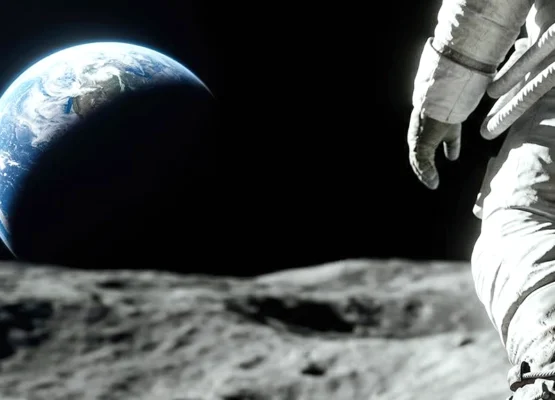
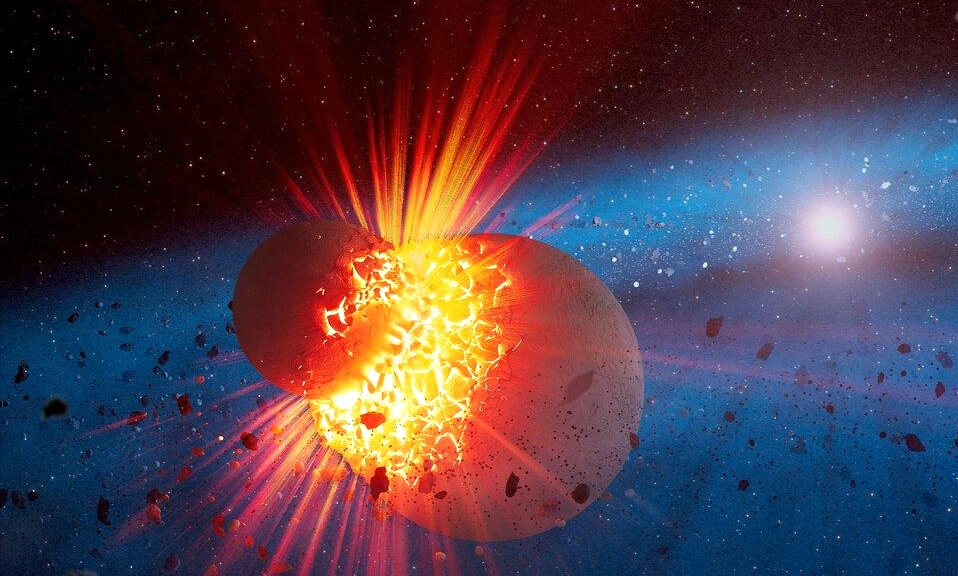
In the early history of our solar system, scientists theorize that a Mars-sized object called Theia smashed into the infant Earth, vaporizing massive amounts of rock and blasting it into space. Some of that material coalesced into the Moon—the very destination NASA’s Artemis program is now preparing to return humans to. That long-ago, violent collision reshaped our home planet. Now, for the first time, NASA’s James Webb Space Telescope has given astronomers a front-row seat to similar cataclysmic events unfolding around other stars, offering a rare glimpse into the chaotic processes that may have shaped Earth and its lunar companion.
The Discovery: Extreme Debris Disks
Using the James Webb Space Telescope, a team of astronomers led by Kate Su of the Space Science Institute in Boulder, Colorado, investigated a mysterious class of circumstellar disks known as “extreme debris disks”. These are rings of warm dust and rock orbiting mature stars, and within them, Moon-sized and even Mars-sized objects are colliding, creating massive amounts of warm dust.
Approximately 20 years ago, NASA’s retired Spitzer Space Telescope first uncovered this enigmatic subclass of disks. But it was Webb’s powerful mid-infrared instruments that allowed astronomers to truly understand what was happening. The team compiled a sample of 21 extreme debris disks, including five from Spitzer’s archival data and 16 from Webb, with 12 newly observed disks and follow-up observations on four of Spitzer’s.
“This is the first time we have gathered enough systems to truly understand this subclass that we call extreme debris disks,” said Su, lead author of the paper published in The Astrophysical Journal. “Before Webb, we had limited information. We knew that they are weird and very different from the typical cold debris disks that we know, like Vega and Fomalhaut. Now that we have more data, we can pin down what these disks represent for planet formation and evolution.”
Reading the Dust: Silica-Rich vs. Silica-Poor
The key to unlocking these cosmic crime scenes lay in the composition of the dust itself. Using Webb’s mid-infrared spectra, the team identified three distinct traits defining these extreme disks: microscopic dust grains, unusually high concentrations of warm material, and irregular fluctuations in brightness over time.
But the real breakthrough came when they analyzed the mineralogical makeup of the dust. They found that their sample could be categorized into two distinct groups: silica-rich and silica-poor. Volcanic glass like obsidian is one example of silica-rich material found on Earth, whereas the silica-poor mineral forsterite appears as green sand grains.
About one-third of the disks studied were silica-rich, suggesting these systems were produced by high-energy impacts between Mars-sized bodies where a significant portion of the material was vaporized. The remaining two-thirds were silica-poor, indicating that the collisions were occurring on smaller scales, like grazing impacts between Moon-sized objects.
“To just see their mid-infrared emission and beautiful spectral features with Webb, which allowed us to identify their compositions, was the most exciting thing for me,” said Agnes Kospal of Konkoly Observatory in Budapest, Hungary, and a coauthor of the study. “We have no other way to study these planetary embryos directly because they are too small”.
A Rare and Violent Phase
Contrary to theoretical predictions, which suggested we should observe many extreme debris disks, observations indicate that these environments are rare. Scientists estimate that roughly only 1% of young stars show observable signatures of this phase based on data collected so far—including possibly our own solar system during its formation.
The team also noted an important pattern: silica-rich disks appear only around stars younger than 300 million years, while silica-poor disks appear around stars with a broad range of ages. This timing is crucial. Simulations suggest that terrestrial planets, such as Earth, should form within the first few hundred million years of a solar system’s formation. This period fits with the ages of silica-rich extreme debris disks observed so far and aligns with the estimation that Earth and the Moon formed around 100 million years after the Sun formed, with the Moon likely being the result of a collision between Earth and a Mars-sized object.
Could This Be How Our Moon Was Born?
The connection to our own solar system is striking. According to the Giant Impact Hypothesis, a collision with a Mars-sized object called Theia about 4.5 billion years ago led to the formation of the Earth-Moon system. The heat from that impact melted Earth’s crust and blasted material into space, some of which eventually coalesced into the Moon we see today.
The extreme debris disks Webb observed are essentially snapshots of this very process happening elsewhere in the galaxy. The silica-rich disks, produced by high-energy impacts between Mars-sized bodies, bear the chemical fingerprints of the kind of cataclysmic collision that formed our Moon. “How rocky planets formed and giant planets evolved are part of the broader story of the solar system’s formation. It’s all one story,” said Su. “Our work on extreme debris disks helps us bring together the big picture of what we currently understand”.
Why This Matters
This discovery isn’t just about understanding distant star systems. It’s about understanding our own origins. The violent collisions that shaped Earth and created the Moon weren’t unique to our solar system—they’re a fundamental part of how rocky planets form and evolve everywhere in the universe.
By studying extreme debris disks around young stars, astronomers are essentially looking back in time at the conditions that existed in our own solar system billions of years ago. As Webb continues to observe these chaotic systems, we may soon have even more clues about the cosmic violence that gave birth to our home planet and its constant companion.
The findings, published on October 1, 2026, in The Astrophysical Journal, represent a major step forward in our understanding of planet formation and evolution. And they serve as a powerful reminder that the story of Earth and the Moon is written in the same cosmic language as the countless other worlds being forged across the galaxy.
For now, the next time you look up at the Moon, remember: it’s not just a satellite. It’s a survivor of one of the most violent events in our solar system’s history—and thanks to the James Webb Space Telescope, we now know that story is playing out again and again, around stars we can finally see.