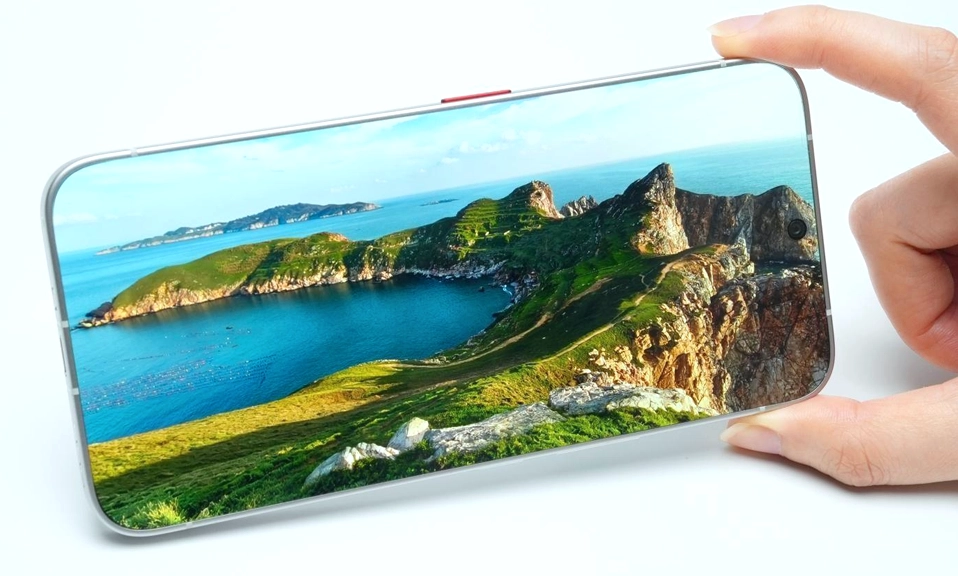
The smartphone industry has spent more than a decade stretching screens taller and narrower, chasing a 20:9 ideal that prioritised one-handed grip above almost everything else. Now, a new leak suggests Xiaomi is preparing to break that pattern entirely. According to the prolific tipster Digital Chat Station, an Android manufacturer is testing a wide-screen candybar phone with a side-mounted fingerprint scanner—and the evidence points strongly to Xiaomi. If the rumour holds, it would mark one of the most significant shifts in phone design since the bezel-less era began.
The leak, posted on Weibo on 4 November 2026, is thin on detail but rich in implication. The device is said to use a 16:10 or 16:9 aspect ratio, similar to the cover screen of Huawei’s Pura X View. It would not be foldable. It would carry a side-mounted fingerprint sensor, a common feature on foldables but rare on conventional slabs. And it would join a race that Huawei started in August 2026 with the Pura X View—a phone that has reportedly sold strongly enough to make the rest of the Android industry reconsider its previously shelved wide-screen designs.
The question is no longer whether wide-screen phones are coming. It is whether they represent a genuine correction to the tall-phone era, or simply another form-factor fad in a market that is running out of ways to differentiate.
What the Leak Actually Says (and Doesn’t Say)
The source is a single Weibo post, and it is important to be clear about the limits of the information. Digital Chat Station did not name Xiaomi outright; the brand is a strong inference from an emoji and the surrounding context. Xiaomi has not commented, and there is no confirmed launch window, chipset, camera specification, battery capacity, or price.
What the leak does suggest is a device that takes the proportions of a foldable’s cover display and puts them into an ordinary, non-folding body. The closest reference point is the Xiaomi 18 Fold, which launched in China on 7 September 2026 with a wide-format design and an external display measuring 5.38 inches at a roughly 3:2 aspect ratio. The leaked slab would take that proportion out of the foldable and into a conventional phone.
A separate report from Ximitime, citing the same tipster, suggests Xiaomi’s Redmi brand is working on a wide-screen straight phone for 2027. That timeline is consistent with a device that is still in an early testing phase, not one that is about to launch.
The Wider Trend: Huawei Lit the Fuse
Xiaomi is not acting in a vacuum. The wide-screen candybar is already a real product category, and Huawei is the company that proved there is demand for it.
The Huawei Pura X View, launched on 20 August 2026, is described as the first wide-screen candybar. It has a 6.39-inch OLED panel with a 16:9.5 aspect ratio, 1.05mm bezels, and a 96.1% screen-to-body ratio. It is 6.68mm thin and weighs 201g despite a 7,000mAh battery. Early sales have been strong: one report puts the figure at over 280,000 units in the first five days, another at 250,000 units in four days, and a third—citing cumulative data through the 43rd week of 2026—puts total sales at around 755,300 units despite a starting price of 5,999 yuan.
That commercial traction has changed the calculus for everyone else. According to Android Authority, the strong early reception of the Pura X View has prompted multiple Android competitors to “dust off and reconsider” wide-screen non-foldable designs they had previously shelved. In August 2026, only OPPO was actively considering mass production; by September, the hesitation was “evaporating”.
The result is a broad industry shift. OPPO is developing a wide flat phone with a 16:9 screen around 6.35 inches, targeting the flagship market with a flagship processor, 3D ultrasonic fingerprint sensor, and a high-quality imaging system. vivo is planning a smaller wide-screen device under 6.5 inches, expected in 2027. Honor and Redmi are also reportedly testing similar concepts. The wide-screen straight phone is no longer a Huawei curiosity. It is becoming a category.
Why Wider Makes Sense (and Why It Doesn’t)
The appeal of a wider slab is not difficult to understand. Tall phones are comfortable to hold in one hand, but they are awkward for almost everything else. A wider panel gives two-thumb typing more room, lets two apps sit side by side without feeling squeezed, and shows 16:9 video with smaller black bars. As Android Headlines frames it, the pitch is a broader display without the cost and complexity of a foldable hinge.
That last point is crucial. A wide-screen candybar offers some of the benefits of a foldable’s expansive inner display—more horizontal space for gaming, reading, and multitasking—at a lower price and with lower technical complexity. There is no hinge to fail, no crease to tolerate, and no folding mechanism to add thickness and cost. For users who want more screen real estate but are not willing to pay the foldable premium, it is a compelling proposition.
The case against is equally clear. The last time wide phones were popular—the phablet era of the early 2010s—they were abandoned because they were difficult to use with one hand. That ergonomic problem has not disappeared. Even modern foldables like the Galaxy Z Fold 8 and iPhone Duo are uncomfortable to operate one-handed in their folded state, and a wide slab would present the same challenge. The PhoneArena survey that found strong enthusiasm for wide phones also found that 25% of respondents considered the design inconvenient.
There is also the question of whether this is a genuine consumer preference or a symptom of market boredom. One analysis of the trend argues that explosive interest in wide phones is driven by “banal buyer boredom” : modern slabs have become too tall, too narrow, and too similar to each other, copying everything from camera module design to corner radius. Users, the argument goes, are willing to sacrifice some convenience for visual novelty.
The Xiaomi Question: A Logical Step, or a Me-Too Move?
For Xiaomi, a wide-screen straight phone would be a logical extension of its existing strategy. The company has already demonstrated experience with new form factors and display technologies through the Xiaomi 18 Fold, which uses a wide-format design. A non-folding wide slab would complement that portfolio and target a new audience—users who want the benefits of a wider display without the compromises of a foldable.
But the timing matters. The leaked device is reportedly in an early phase of development, with a release expected no earlier than 2027. By then, Huawei will have had more than a year of sales data, OPPO and vivo will likely have launched their own wide-screen models, and the market will have a much clearer signal about whether this is a durable category or a short-lived trend. Xiaomi’s decision to test rather than commit is prudent. It allows the company to learn from the first movers without taking the full risk of pioneering a form factor that may not stick.
There is also the question of whether Xiaomi would position the device as a flagship or a more affordable alternative. The leak mentions a side-mounted fingerprint sensor, which is typically associated with mid-range devices or foldables rather than premium flagships. OPPO’s wide-screen prototype is reportedly targeting the high-end market with a flagship processor and advanced imaging, while vivo’s is described as a smaller, more conservative design under 6.5 inches. Xiaomi’s positioning is not yet clear, and that ambiguity is one of the most interesting unanswered questions about the rumour.
Is the Traditional Phone Design Actually Changing?
The honest answer is: it is being challenged, but it is not yet being replaced.
The tall, narrow slab remains the default form factor for the vast majority of smartphones sold worldwide. It is the shape that manufacturers have optimised for years, the shape that accessory makers have built their businesses around, and the shape that most consumers are accustomed to using. A wide-screen candybar is a departure, not a revolution.
But the trend is real, and it is gaining momentum. Huawei has proven that there is a market for a wide, non-folding phone. OPPO, vivo, Honor, and Xiaomi are all exploring the concept. The PhoneArena survey found that nearly half of respondents wanted to try a wide-screen device, and another 18% thought the idea was excellent. That is not a niche curiosity. It is a signal that a meaningful segment of the market is dissatisfied with the tall-phone status quo.
The more likely outcome is not that wide phones replace tall phones, but that they coexist as a distinct category—a middle path between the conventional slab and the foldable, offering more screen real estate without the price and complexity of a hinge. If that happens, the traditional phone design will not have changed. It will have diversified.
Xiaomi’s rumoured
wide-screen phone is not confirmed, and the details are sparse. But the leak is consistent with a broader industry movement that is already producing real products and real sales. Huawei has shown that the wide-screen candybar can work. The rest of the Android ecosystem is scrambling to follow. And Xiaomi, with its experience in foldable design and its appetite for new form factors, is well positioned to join the race.
Whether this is a genuine correction to the tall-phone era or a passing infatuation with novelty will be decided by consumers, not by leaks. But the fact that so many manufacturers are testing the concept suggests that the traditional phone design is no longer the only answer. The slab is getting wider. The question is whether you will want to hold it.