Alexander Zverev arrived in Shanghai chasing a third major title of a season that had already redefined his career. He left it beaten, exhausted, and insisting he had “overachieved” simply by reaching the semi-finals.
The world No. 2 and soon-to-be year-end No. 1 fell to Spain’s Alejandro Davidovich Fokina 5-7, 6-4, 6-3 on Saturday, ending his hopes of a first Shanghai Masters crown and handing the 25th seed a place in the final against compatriot Rafael Jodar.
On paper, it was an upset. In reality, it was the culmination of a schedule that had finally caught up with a player who had spent the past two months winning everything in sight.
The Match: A Set Won, a Tank Empty
Zverev won the first set 7-5. He was not playing well — even he admitted that — but he was managing. Then the match turned.
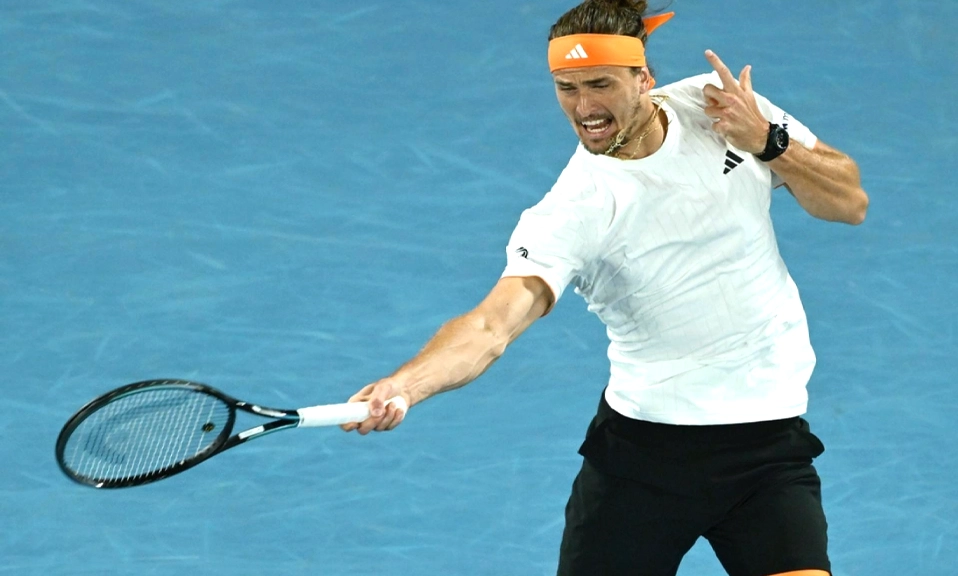
Davidovich Fokina broke Zverev to take the second set, sealing it with a stunning running backhand passing shot that capped a bruising baseline exchange and brought the Shanghai crowd to its feet. The Spaniard carried that momentum into the decider, breaking Zverev for a 2-0 lead and never looking back.
The statistics told a clear story. Davidovich Fokina fired 36 winners across two hours and two minutes, landed 82% of his first serves, and repeatedly exposed Zverev’s forehand side. It was only his second victory over Zverev in eight meetings — the first came at the Canadian Open in 2023.
Zverev, by contrast, was a step slow. His return — normally one of the most reliable parts of his game — deserted him. He struggled to handle wide forehands to the deuce court, and he knew exactly why.
“I knew that he is serving there, but the return is the most difficult shot when you’re a bit fatigued because the first thing that gets tired in tennis I think is your eyes,” Zverev said. “I knew that the serve was going there, I was with it on the racquet most of the time, but I was missing it, I was not returning inside the court”.
“I’m Not a Robot”: Zverev’s Honest Admission
Zverev did not hide behind excuses. He also did not pretend the defeat was a mystery.
“First, I’m not a robot, I’m a human being, I get tired,” he said, smiling. “After the US Open, I had one day off in total. I think I played a lot of tennis, which is very, very positive because that means I played well”.
The timeline is brutal. Zverev won the US Open in September, flew to the Laver Cup, then to Beijing, then to Shanghai — barely stopping to breathe in between. He carried “a little bit of injury” and “fatigue” into the tournament, and by the time he faced Davidovich Fokina, the tank was empty.
He felt the energy draining after his fourth-round battle with Alexander Bublik, which he won in a third-set tiebreak. He described his quarter-final win over Alex de Minaur as “phenomenal” — but it took everything he had left.
“Even in the first set, even though I won the set, I was flatter, I was not reacting so well. I was returning quite badly,” he said. “We’re all human beings, even the best players in the world”.
The “Overachieved” Comment: Context Matters
The headline from Zverev’s press conference was that he felt he had “overachieved” this week. Read in isolation, it sounds like an excuse. Read in full, it is something more nuanced.
“I think it depends on the loss,” he explained. “If I feel like I could have done something more, then it’s painful for me, and it always will be painful. It doesn’t change what you won in the past. But if you feel like you’ve done everything that you could — and I feel like this tournament, funny enough, I lost, yes, to Alejandro, who people will say, ‘Oh, he’s ranked 20 whatever in the world’ — he’s playing well, first. Second, I feel like I’ve actually, in a way, maybe overachieved this week because of how much tennis I played”.
Zverev was not saying he was satisfied with losing. He was saying that, given the circumstances — the fatigue, the injury, the relentless schedule — reaching the semi-final was itself an achievement. He was acknowledging his limits, not lowering his standards.
It is a distinction that matters. Zverev has spent years being criticised for faltering in the biggest moments. Here, he was honest about why he faltered: not because he lacked the game, but because his body had nothing left to give.
Davidovich Fokina’s Brilliance: Credit Where It’s Due
It would be unfair to frame this solely as a Zverev collapse. Davidovich Fokina played one of the best matches of his career.
The Spaniard is on a remarkable run in China. He won the ATP 250 event in Chengdu last month and has now won nine consecutive matches on Chinese soil. Against Zverev, he was aggressive, precise, and relentless — exactly the kind of opponent who punishes a tired player.
“I knew that if I stayed there all match, I could get at least one chance, and I took it there in the second set,” Davidovich Fokina said. “Then in the third set, I think I was better physically. The early break in the third set gave me a lot of power. I focused on just playing, not mattering about the result but enjoying it”.
That is the luxury of the underdog. He had nothing to lose. Zverev had everything to lose — and no energy to protect it.
The Bigger Picture: A Season of Triumph and Toll
It is easy to forget, in the wake of a semi-final defeat, what Zverev has achieved this season.
He won his first Grand Slam title at the French Open, ending a three-decade drought for German men’s tennis. He backed it up with a second major at the US Open, becoming just the fourth man in the Open Era to win his first two Grand Slams in the same season. He is guaranteed to finish the year as world No. 1 — the first German to do so since 1991.
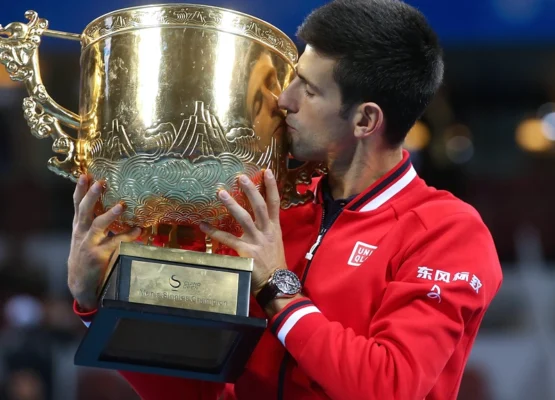
But those achievements came at a cost. The relentless schedule, the travel, the pressure — it all accumulates. Zverev’s body has been sending warning signals for weeks. His ankle bothered him in the early rounds in Shanghai, though he said it was fine against Davidovich Fokina. His energy has been flagging since Beijing, where he lost to Novak Djokovic in the China Open final.
The Shanghai defeat is not a crisis. It is a warning. Zverev is 29 years old. He has played more tennis this season than almost anyone on tour. If he wants to defend his No. 1 ranking in 2027 — and challenge Sinner and Alcaraz when they return to full fitness — he will need to learn when to stop.
What Comes Next
Zverev is next scheduled to play the ATP 500 in Vienna. The Paris Masters — the final Masters 1000 event of the season — offers his last chance to win a title at that level in 2026. Then comes the ATP Finals, where he will be the top seed.
But the most important thing he can do right now is rest. The year-end No. 1 ranking is secure. The Grand Slams are won. The only thing left to protect is his body — and the form that made this season possible.
“I think it was a good trip,” Zverev said of his Asian swing. “I think I played a lot of tennis the weeks before. I’m going to repeat the same thing. Beijing, I arrived one day before the tournament from the Laver Cup, and I played a fantastic match against Novak, which I lost, which can happen. Here, I was a bit tired. It’s how it is”.
It is how it is. But it is also a lesson. The best players in the world are not robots. They get tired. And sometimes, the only way to win is to know when to stop.
What do you think — should Zverev have skipped Shanghai to protect his body, or was the decision to play the right one?