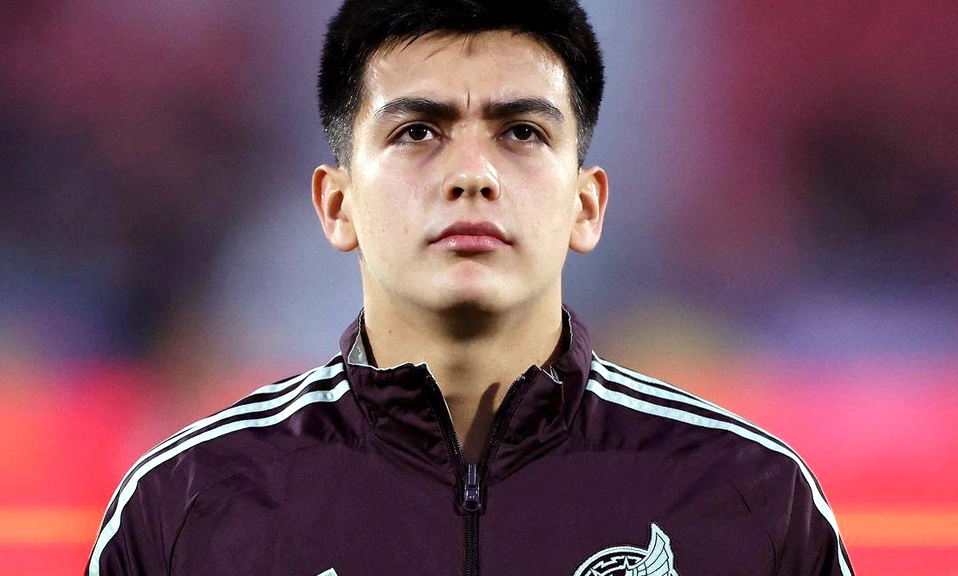
Mexico has produced a long line of gifted attacking midfielders, but few have entered the senior spotlight as quickly as Gilberto Mora. Before turning 18, the Club Tijuana playmaker had already become Mexico’s youngest senior international, the youngest Liga MX scorer and the youngest player to win a senior international tournament.
His breakthrough continued at the 2026 FIFA World Cup, where he became the tournament’s youngest player and then started a match for Mexico at 17. His performances have turned him from a promising teenager into one of the most closely watched young footballers in North America.
Mora’s rise has also created intense transfer speculation. European clubs have reportedly monitored him, and media reports have linked him with possible moves to some of the biggest teams in the sport. But as of the latest confirmed reporting, he remains a Tijuana player. The transfer rumors are part of the story—not proof that a completed deal has been announced.
Who is Gilberto Mora?
Gilberto Rafael Mora Zambrano is an attacking midfielder developed by Club Tijuana. He was born on October 14, 2008, and made his senior Liga MX debut for the club while still 15.
Mora is generally deployed in an advanced midfield or attacking role, where he can receive between the lines, combine with forwards and look for the pass that breaks open a defense. He is not known only for spectacular moments. His appeal comes from the combination of technical confidence, quick decision-making and a willingness to play with responsibility despite his age.
His early development at Tijuana has also given him an important advantage: regular exposure to professional football. Instead of being known only from youth tournaments, Mora has had to compete against experienced Liga MX players and adapt to the physical and tactical demands of senior matches.
A remarkable list of records
Mora’s reputation is built on more than highlight clips. His age-related records provide a clear timeline of how quickly he has progressed.
According to reporting from ESPN and MARCA, Mora:
•Debuted in Liga MX for Tijuana at 15.
•Became the youngest player to start and score in a Liga MX match at 15 years and 320 days.
•Made his Mexico senior debut at 16 years and 257 days.
•Became the youngest player to score for Mexico’s senior team.
•Helped Mexico win the 2025 Concacaf Gold Cup at 16 years and 265 days.
•Became the youngest player to win a senior international tournament.
•Became the youngest Mexican player to appear at a FIFA World Cup.
•Became the youngest Mexican player to start a World Cup match.
Records can be misleading when treated as predictions. Being young does not guarantee a long career, and early success can bring pressure as well as opportunity. In Mora’s case, however, the records matter because they have been accompanied by meaningful minutes, difficult opponents and increasingly important roles.
His World Cup breakthrough
Mora’s 2026 World Cup involvement showed why Mexico’s coaching staff trusted him despite his age.
He appeared sparingly at first, entering as a substitute in Mexico’s opening match and not playing in the second group game. He then started the final group match against the Czech Republic, helping Mexico win 3–0.
One of his most important contributions came during the buildup to Mexico’s second goal. Mora found Jorge Sánchez with a pass, and the move eventually led to Julián Quiñones finishing from the resulting scramble. His ability to see the forward option quickly gave Mexico’s attack a different rhythm.
The start also broke a long-standing Mexican record. Mora became the youngest Mexican player to start a World Cup match, surpassing the mark held by Manuel “Chaquetas” Rosas from the 1930 tournament.
His performance did not mean that he had suddenly become Mexico’s unquestioned starter. It did show that he could influence a major match rather than simply participate in it.
That distinction is important. Young talents are often praised for potential, but Mora’s World Cup moment offered evidence of present ability. He scanned for options, linked with senior forwards and played with enough composure to affect the result.
Why his style stands out
Mora’s game is based on the traits coaches want from a modern attacking midfielder.
He is comfortable receiving the ball in crowded central areas, where a single touch can determine whether an attack continues or breaks down. He can carry the ball forward, combine with teammates and make passes that move defenders rather than simply circulate possession.
His movement also helps him avoid being reduced to a traditional No. 10 who waits for the ball. Mora can drift into wider channels, drop into midfield to connect play or arrive near the box after the first defensive line has been beaten.
The most impressive aspect may be his decision-making under pressure. At 17, he was already being asked to interpret the game rather than follow a narrow set of instructions. That does not mean every choice is perfect. It means he is showing the willingness and awareness required to keep improving at the highest level.
His technical ability is especially valuable for Mexico, a national team that has often relied on creative midfielders to unlock compact defenses. Mora gives the team another player capable of connecting midfield and attack without needing a large amount of space.
Tijuana’s role in his development
Club Tijuana has become central to Mora’s emergence. The club gave him a first-team pathway at an unusually young age and later committed to keeping him with a three-year contract extension. ESPN reported that Tijuana also handed Mora the No. 10 shirt.
The contract reportedly includes a tailored release mechanism that reflects the possibility of a major future bid, although the exact financial structure has not been fully detailed publicly. Tijuana’s president described the agreement as a historic one for the club and emphasized the responsibility involved in supporting Mora’s development.
That decision gave the teenager a stable professional environment while allowing the club to protect its interests. It also made clear that Tijuana did not want to lose control of his development simply because European clubs had begun to watch him.
A young player’s next step is not automatically the biggest club that expresses interest. Regular minutes, coaching quality, language support and the right tactical environment can be as important as the prestige of the badge.
For now, Tijuana remains the place where Mora is learning how to manage the demands of professional football.
The European transfer rumors
Mora’s World Cup exposure intensified speculation about a move to Europe. Reports have linked him with clubs including Real Madrid, Barcelona, Manchester City, AC Milan, Liverpool and Borussia Dortmund.
Some reports have suggested that a transfer could be worth a Mexican-record fee, with figures around $50 million or a release clause of roughly €25 million appearing in different coverage. Those numbers should be treated cautiously because media reports have not established a single confirmed fee or destination.
Mora turned 18 on October 14, 2026, a date that attracted additional attention because international transfer rules make a move easier once a player reaches adulthood. Several reports predicted that an announcement might arrive around his birthday.
As of the latest reporting, no European club had officially announced a completed transfer. MARCA described a move as imminent based on people close to the player, while other reports emphasized that Mora remained a Tijuana player and that the timing of any transfer was uncertain.
The responsible conclusion is that European interest appears serious, but the next club, transfer fee and completion date remain unconfirmed.
Why waiting could help Mora
The pressure to move to Europe immediately is understandable. A player who performs at a World Cup and attracts attention from major clubs will naturally be encouraged to take the biggest opportunity available.
But development is not a race measured only by the age of a transfer. Mora may benefit from another period of regular football in Mexico before moving to a new country, league and tactical system.
At Tijuana, he already understands the environment and has the trust of the club. In Europe, he might join a famous team but spend significant time adapting or playing for a reserve side. That could still be a good pathway, but it would require patience.
The most useful question is not “How quickly can Mora leave Mexico?” It is “Which move gives him the best chance to keep playing and improving?”
That decision will involve his family, representatives, club and national-team staff. It should not be determined by headlines alone.
Handling the pressure of being Mexico’s next star
Mora’s age makes the attention unusually intense. Every goal, missed pass and injury update can be treated as evidence for or against a sweeping prediction about his future.
Mexico has a passionate football culture and a long memory of young players labeled as the next great star. Some develop into important internationals; others struggle when expectations become too large too soon.
Mora’s challenge will be to maintain the habits that brought him this far: training consistently, accepting coaching, protecting his body and continuing to learn from older teammates. He will also need the freedom to make mistakes without every imperfect match being treated as a crisis.
The best support for a young player is not constant comparison with Pelé, Lionel Messi or other legends. It is a stable environment in which the player can become himself.
The importance of his Mexico role
Mora’s progress has arrived during a period when Mexico is trying to build a new generation around the 2026 World Cup and beyond.
The national team has benefited from experienced players, but the emergence of younger talents gives the squad more options for the next cycle. Mora’s ability to operate between midfield and attack could become especially valuable as Mexico develops different ways to break down opponents.
Coach Rafael Márquez has praised Mora’s talent, mindset and potential to succeed at a high level. Márquez has also emphasized the need for guidance, a reminder that raw ability is only one part of a player’s development.
Mora does not need to carry the entire future of Mexican football. His role should grow according to his performances and physical development rather than the weight of a national narrative.
If he continues to improve, he can become a central figure in Mexico’s next generation without being forced to solve every problem at once.
A closer look at the numbers
Before turning 18, Mora had already produced meaningful club and international statistics. El Paso Times reported that he had five goals and one assist in seven Liga MX matches during the 2026 Apertura season, including six starts, before a period affected by injury and international duty.
That sample is small, but it helps explain the excitement around him. He was not merely receiving late cameos. Tijuana was giving him starts, and he was contributing directly to the attack.
Mora also missed some recent national-team matches because of ankle or hip issues, according to reports. That is another reason to avoid judging his future from a single month or tournament. Young players need careful management, especially when club and national-team schedules overlap.
The combination of early production and high-level exposure is rare. The next test will be consistency: sustaining performance through a full season, responding to tactical adjustments and staying healthy.
What he still needs to improve
Even the most gifted young players have areas to develop.
Mora must continue building physical strength without losing the agility and balance that make him dangerous. He will also encounter opponents who study his tendencies and close his preferred passing lanes.
Defensive responsibility will become more important as he moves into higher-level football. A creative midfielder cannot always wait for the ball; he must also help his team press, recover possession and maintain its shape.
Decision-making in the final third will be another focus. A player who can create a chance is valuable, but the next level demands that he recognize when to shoot, pass, slow the play or attack space.
These are not criticisms of a teenager. They are normal stages in the development of an attacking player who is beginning to face senior expectations.
Why the comparison with famous players is risky
Mora’s records have placed him alongside historic names, particularly because his World Cup milestones brought comparisons with Pelé. Those comparisons make headlines, but they can obscure what makes Mora unique.
Pelé’s early achievements belong to a different era, and no two careers follow the same path. A record for age tells us when something happened, not whether two players have the same style, personality or long-term trajectory.
Mora should be evaluated as Gilberto Mora: a Mexican attacking midfielder with a rare early opportunity, strong technical qualities and a career still being formed.
The most exciting part of his story is not that he resembles a legend. It is that he has already created a record-breaking beginning of his own.
What comes next?
The immediate priorities are straightforward: recover fully from injury concerns, regain regular club minutes and continue learning with Tijuana and Mexico.
The transfer question will remain in the background. If a European move is completed, Mora will face a new set of challenges involving language, travel, tactical adaptation and competition for places. If he stays in Mexico longer, he will have the chance to play a larger role for Tijuana and strengthen his case through sustained form.
Neither path guarantees success. The quality of the decision will depend on timing and fit, not only on the size of the transfer fee.
For Mexico supporters, the most encouraging sign is that Mora has already shown he can perform when the stage becomes larger. His World Cup start was not a final destination. It was evidence that he belongs in conversations about the country’s future.
Gilberto Mora has emerged
as one of Mexico’s most exciting young football talents because his promise is supported by records, performances and responsibility at senior level.
Before turning 18, he had become Mexico’s youngest senior international, a record-setting Liga MX scorer, a Gold Cup winner and the youngest Mexican player to start a World Cup match. At Tijuana, he has developed from a teenage debutant into a No. 10 attracting attention from major European clubs.
The transfer speculation is real, but it is not yet a completed move. As of the latest confirmed reports, Mora remains a Tijuana player, and the details of any European transfer are still uncertain.
That uncertainty may be healthy. For now, Mora has time to keep improving, recover from injury concerns and decide which next step serves his career best.
Mexico may have found a special player. The task now is to give him the time, guidance and freedom to become one.