For decades, the spare room was a shrine to obligation. It sat behind a closed door for 51 weeks of the year, furnished with a bed nobody slept in, a candle nobody lit, and a stack of towels folded into perfect thirds. It existed not for you, but for the hypothetical guest who might one day visit.
In 2026, that door is being flung open. The guest room isn’t disappearing — it’s being repurposed. Across homes in cities and suburbs alike, spare rooms are being transformed into craft studios, home gyms, music rooms, libraries, gaming dens, and art spaces. The trend has a name — “hobby rooms” or “joy rooms” — and it’s reshaping how people think about the square footage they actually live in.
The logic is simple, and it’s hard to argue with: if a room is used for guests three nights a year and could be used by you every single day, which is the better use of the space?
Why the Guest Room Is Losing Its Grip
Several forces have converged to push the guest room out of favor.
The Cost of Space Has Never Been Higher
Housing is expensive. Whether you rent or own, every square foot costs money. Devoting an entire room to occasional guests means devoting an entire room to something that generates no daily value. As household budgets tighten, that calculation is becoming harder to justify.
Remote Work Changed What “Home” Means
The pandemic permanently altered the relationship between home and work. For millions of people, home is now the primary site of productivity, creativity, and leisure. A room that sits empty is a missed opportunity in a home that is now expected to do more.
The “Joy Room” Is a Mental Health Investment
There’s a growing recognition that personal space is not a luxury but a necessity. The rise of the “analog home” trend — creating screen-free spaces for reading, crafting, and quiet — has dovetailed with the hobby room movement. A room that supports your interests is a room that supports your well-being. As one interior designer put it: “People are realizing their homes should be a refuge, not another extension of their inbox.”
Guests Are Being Accommodated Differently
The rise of Airbnb and short-term rentals has made it easier than ever to host guests without dedicating a permanent room to them. If a room is needed for a visit, a nearby rental, a convertible sofa, or a beautifully designed air mattress can fill the gap. The obligation to keep a shrine to guests is fading.
What People Are Actually Building
The beauty of the hobby room trend is that it looks different in every home. The common thread isn’t a specific aesthetic — it’s the decision to prioritize personal joy. Here are some of the most popular conversions.
1. The Craft Room
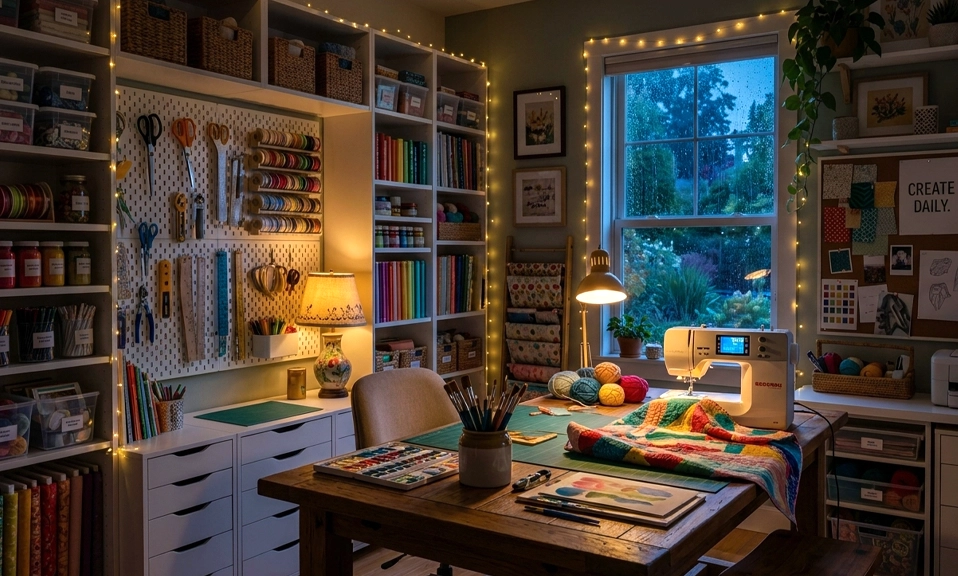
For knitters, sewers, quilters, and makers, the hobby room is a dedicated space for the tools and materials that once crowded every closet and corner. Pegboards, built-in shelving, a large work table, and excellent task lighting turn the room into a creative laboratory.
2. The Home Gym
The home gym revolution that began during the pandemic has only accelerated. A spare room is the perfect place for a squat rack, a Peloton, a set of dumbbells, and a mirror wall. The payoff isn’t just physical — it’s the elimination of the commute to the gym and the excuse not to go.
3. The Music Room
Whether you play guitar, drums, or piano, a dedicated music room is transformative. Acoustic panels, proper storage for instruments, and space to set up a home recording studio make the room a sanctuary for practice and creation.
4. The Library and Reading Room
Book lovers are reclaiming the guest room as a library — floor-to-ceiling shelves, a comfortable armchair, warm lighting, and a quiet corner for reading. It’s the analog home philosophy distilled into a single room.
5. The Gaming Room
For gamers, a dedicated room means the freedom to build a setup that doesn’t have to double as a home office. Ambient lighting, a proper desk, a comfortable chair, and enough screens to feel like a command center.
6. The Art Studio
Painters, sculptors, and illustrators need space to make a mess. A room with natural light, a sturdy easel, and storage for materials becomes a place where creative work can happen without being packed away every evening.
7. The Collection Room
For collectors — of vinyl records, cameras, watches, sneakers, or vintage toys — the hobby room is a place to display and enjoy the things that bring them joy. It’s a museum of personal passion.
How to Decide If It’s Right for You
Not everyone should convert their guest room. Here’s how to think through the decision.
Count the actual nights. How many nights did your guest room get used last year? Be honest. If the answer is fewer than 10, the room is a candidate for reclamation.
Think about the frequency and closeness of guests. If your grandchildren visit for a month every summer, or your elderly parent stays for extended periods, the guest room is genuinely necessary. If the guests are occasional, there are alternatives.
Ask what you’d do with the room. If you have a clear vision — a craft table, a gym, a reading chair — the decision is easier. If you’re not sure, spend some time thinking about what you’ve always wanted a space for.
Consider a hybrid approach. You don’t have to abandon the guest function entirely. A murphy bed, a sleeper sofa, or a daybed can serve both purposes. A room with a bed that folds into the wall and a craft table that doubles as a desk is a guest room and a hobby room in one.
The Practical Playbook
If you’re ready to make the change, here’s how to do it well.
Declutter ruthlessly. The guest room is often the home’s default storage dump. Empty it completely before you begin. Donate what you don’t need, store what you genuinely must keep, and be honest about what’s worth keeping.
Design for daily use, not occasional use. The room should feel welcoming and functional for you. That means comfortable seating, good lighting, and storage that keeps your hobby materials organized and accessible.
Invest in multi-functional furniture. If the room will occasionally host guests, choose furniture that serves both purposes. A comfortable sofa bed, a storage ottoman that doubles as a coffee table, and a craft table that can be cleared for a guest.
Don’t neglect the guest function. If you do want to keep a place for visitors, make it easy. A quality air mattress, bedding stored neatly, and a small basket of guest essentials can turn the room into a welcoming space in minutes.
Personalize it. This is the fun part. Display the things that bring you joy. Paint the walls a color that makes you happy. Hang the art you love. The room should feel like a reflection of you, not a hotel suite.
The guest room was
built on obligation. The hobby room is built on joy.
That shift isn’t selfish. It’s an acknowledgment that home should be a place that serves the people who live in it every day — not just the people who visit once a year. It’s a recognition that personal space, creativity, and well-being are worth dedicating a room to. And it’s a reminder that the best rooms in a house aren’t the ones that impress guests. They’re the ones that make you feel like yourself.
If your guest room has been sitting empty, gathering dust and silent obligation, open the door. Look inside. Ask what it could become.
Then make it yours.