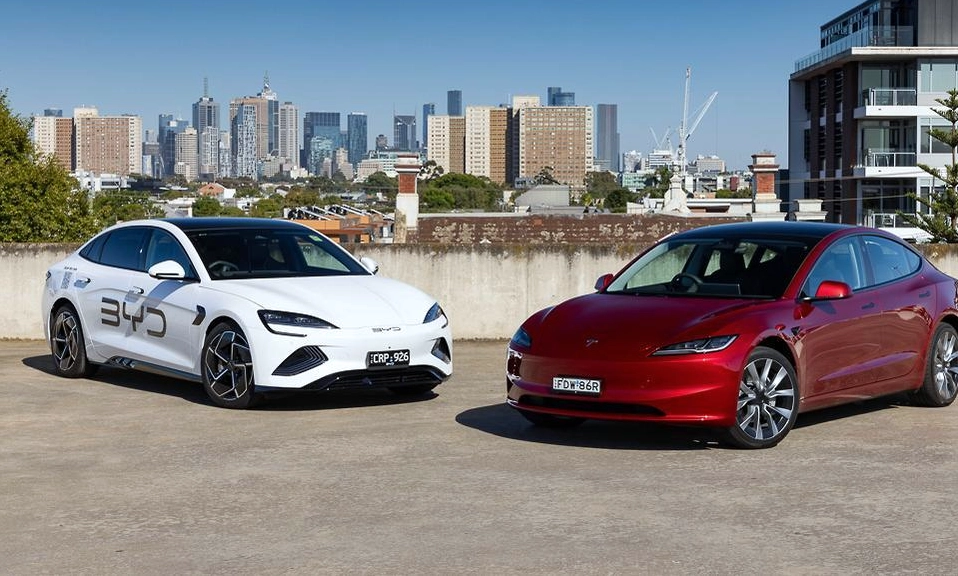
The answer to which electric sedan offers better value in 2026 is not a single number. It depends on whether you define “value” as what you get on the window sticker, or what you pay over the years you own the car. The BYD Seal wins the first argument decisively. The Tesla Model 3 wins the second—but only if you can charge at home and you care about software, efficiency, and resale.
The two cars are closer than ever in price, but they are further apart than ever in philosophy. The Seal is the equipment-rich challenger that undercuts the Model 3 on monthly payments and standard kit. The Model 3 is the efficiency and infrastructure benchmark that costs more upfront but claws back the difference through lower running costs, stronger resale, and a charging network no rival can match. Which one is the better value depends on which of those advantages maps onto your life.
The Sticker Price: The Seal’s Case Is Built on Monthly Payments
On raw price, the Seal has a real advantage in most markets—and the gap is largest when you look at financing rather than cash.
In the UK, a like-for-like PCP comparison (48 months, £1,000 deposit, 10,000 miles per year) puts the BYD Seal Excellence at roughly £541 per month, versus £637 for the Tesla Model 3 Long Range—a difference of about £4,600 over four years. The Seal also carries a higher guaranteed future value in that comparison (£19,548 vs. £18,832), which narrows the risk gap on the back end.
In Australia, the gap is even more dramatic. The Seal starts at $61,990 plus on-road costs**, while the **Model 3 Performance starts at $80,900—a difference of nearly $20,000 before options. Even accounting for trim differences, the Seal is the most affordable of the mainstream performance EVs in that market.
The US is the exception. The Model 3 is the only one of the two officially sold there, with the Standard RWD starting at $36,990** and the **Premium RWD at $42,490. The Seal is not available in the US, which makes the comparison moot for American buyers.
The verdict on price: If you are shopping outside the US and financing the car, the Seal is the cheaper path to a well-equipped electric sedan. If you are in the US, the question is academic—the Model 3 is the only option.
The Equipment Equation: More Kit for Less Money
The Seal’s value argument is not just about the monthly payment. It is about what comes standard.
Every Seal includes a head-up display, heated and ventilated seats, a 360-degree camera, a 12-speaker sound system, and a rotating 15.6-inch touchscreen as standard equipment. It also supports wireless Apple CarPlay and Android Auto—a feature the Model 3 does not offer at all. For buyers who want a car that feels loaded without ticking option boxes, the Seal delivers more “spec sheet value” per dollar.
The Model 3 counters with class-leading software, over-the-air updates that add features over time, and a minimalist interface that some buyers prefer for its cleanliness. But it misses out on several of the features that are standard on the Seal, and its reliance on a single central screen for nearly every control is polarizing.
The verdict on equipment: The Seal wins the feature-for-feature comparison. The Model 3 asks you to pay more for less standard kit, and to accept Tesla’s way of doing things without the option of CarPlay or Android Auto.
Range and Efficiency: The Model 3’s Quiet Comeback
On paper, the Seal looks like it has the range advantage. Its 82.5 kWh Blade battery delivers 354 miles of WLTP range in the Design trim and 323 miles in the Excellence. The Model 3’s Premium RWD returns 363 miles of EPA range, while the Standard RWD delivers 321 miles. The numbers are close, and the testing cycles are not directly comparable.
In the real world, however, the Model 3 is the more efficient car—and that efficiency erases much of the Seal’s paper advantage. Independent testing has found that the Model 3 “usually goes further on a single charge in real conditions” and “recovers energy faster at fast-charging stations”. The Seal’s larger battery is doing more work to achieve a similar real-world range, which means it is carrying more weight and consuming more energy per mile.
The efficiency gap matters most on the motorway, where the Model 3’s lower consumption translates into fewer charging stops on long trips. For a buyer who mostly charges at home, the difference is less significant. For a buyer who road-trips regularly, it is a genuine advantage.
The verdict on range: The Model 3 is the more efficient and more capable long-distance car, even though the Seal has the bigger battery and the more impressive WLTP number.
Charging: The Model 3’s Decisive Advantage
This is the category where the value gap is widest, and it is the single biggest reason to choose the Model 3 despite its higher price.
The Model 3 has native access to Tesla’s Supercharger network, which is widely regarded as the most reliable, seamless, and well-located fast-charging network in the world. It also charges faster: the Standard RWD peaks at 170–225 kW, and the Long Range peaks at 250 kW, adding roughly 250 km of range in 15 minutes. The Seal’s peak is 150 kW, and a 10–80% charge takes around 37 minutes.
The Seal can use third-party CCS networks, and those networks are improving. But the experience is “less polished”—payment is less seamless, reliability is more variable, and the locations are less densely packed. For anyone who relies on public charging, the Supercharger advantage alone can justify the Model 3’s price premium.
The verdict on charging: The Model 3 wins decisively. If you cannot charge at home, this is the category that should decide the purchase.
Ownership Costs: Depreciation, Insurance, and Warranty
The sticker price is only the beginning. Over five years, the financial picture shifts—and the Model 3’s advantages in resale and efficiency narrow the Seal’s upfront savings.
Depreciation is the Seal’s biggest financial risk. Early Seals lost around 40% of their value in two years as BYD cut prices, and the Model 3’s resale retention is proven and strong (~52% over five years in one analysis, versus ~46% for the Seal). Over five years, one European TCO analysis found the Seal lost €29,036 in value versus €22,589 for the Model 3—a gap of more than €6,400 in the Tesla’s favour.
Insurance is the second gap. The Seal sits in insurance groups 48–50, among the highest of any family car, while the Model 3 ranges from 32 to 48. In one comparison, the Model 3’s insurance cost was €4,440 over five years versus €6,110 for the Seal—a difference of €1,670. UK testers have also found the Seal “expensive to insure” relative to the Tesla.
Warranty is the Seal’s strongest ownership advantage. It offers a 6-year/150,000 km vehicle warranty and an 8-year/200,000 km battery warranty, both longer than Tesla’s 4-year/80,000 km vehicle and 8-year/192,000 km battery coverage. For buyers who keep cars for many years, the Seal’s warranty is a genuine financial cushion.
The overall five-year cost of ownership still favours the Model 3 in most analyses. One Irish comparison found the Model 3 at ~€27,850 versus ~€31,450 for the Seal—a difference of roughly €3,600 in the Tesla’s favour after accounting for price, charging, insurance, and resale. The Seal’s lower purchase price and longer warranty do not fully offset its weaker resale and higher insurance costs.
The verdict on ownership costs: The Model 3 is the cheaper car to own over five years in most markets, despite the Seal’s lower sticker price.
Driving and Practicality: Comfort vs. Sharpness
The Seal is the more comfortable car. Its suspension is softer and more composed over big bumps, and its cabin is quieter than the Model 3’s. It also offers more rear legroom, making it the more passenger-friendly choice.
The Model 3 is the sharper car. Its 2024 suspension update delivered a more balanced and satisfying experience on a twisty road, and it feels more agile and engaging than the Seal. It also has a larger boot (594 litres versus 402 litres) and a larger frunk (88 litres versus 53 litres), giving it a total load capacity of 682 litres versus the Seal’s 455 litres.
The verdict on driving: The Seal is the better cruiser and the more comfortable family car. The Model 3 is the better driver’s car and the more practical load-lugger.
Match the Value to Your Life
The honest answer is that there is no single winner on value. The Seal and the Model 3 are optimized for different buyers, and the right choice depends on where you live, how you charge, and what you value most.
Choose the BYD Seal if:
You are outside the US and the Seal is available in your market.
You finance the car and the lower monthly payment is the deciding factor for your budget.
You want the most standard equipment for the money—head-up display, ventilated seats, 360 camera, CarPlay, and Android Auto are all included.
Comfort and rear-seat space matter more than handling sharpness.
You value the longest warranty in the class and plan to keep the car for many years.
Choose the Tesla Model 3 if:
You are in the US, where the Seal is not sold.
You cannot charge at home and will rely on public charging—the Supercharger network is the single biggest practical advantage in EVs.
You regularly drive long distances and want the fewest possible charging stops.
You value software, over-the-air updates, and a proven resale record.
You want the lowest five-year total cost of ownership, even if the sticker price is higher.
The Seal is the better value on the day you sign the paperwork. The Model 3 is the better value on the day you sell it. Which one matters more is a question only you can answer.